
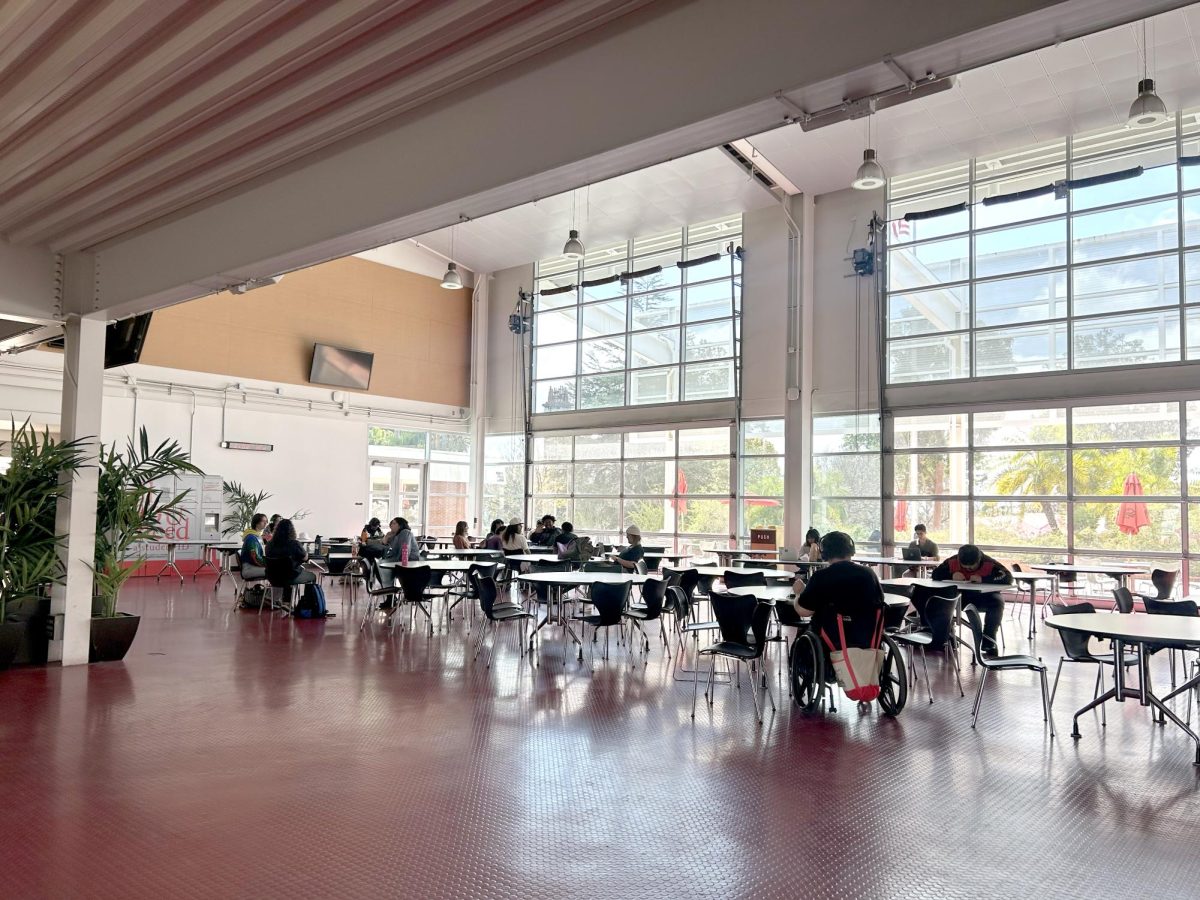
At Palomar, the Student Union is one of the only buildings where students can study or hang out alone or with company. With the lack of charging outlets, chairs, tables, and limited space, the Student Union is not always ideal for students.
The Palomar Student Union is meant to be the heart of campus life. A place where students can gather and feel welcome. For a building so large, the space feels underutilized and poorly designed for serving students’ needs.
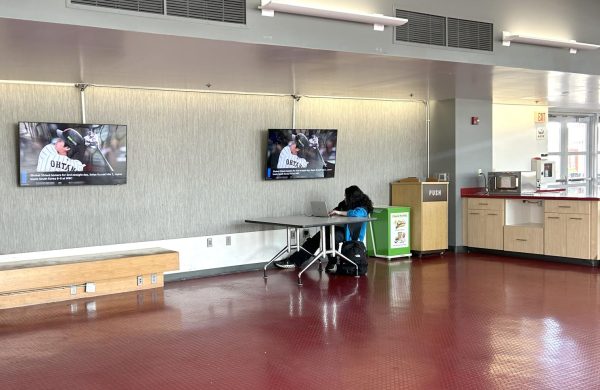
Upon entering the Student Union, you can easily notice the lack of charging ports, which is very inconvenient for students who need to work on their computers and phones. Another issue with the space is the inconsistency of chairs per table. Instead of each table being set with chairs, chairs are scattered around, making it difficult to find a reliable seating option. If the Student Union offered a variety of reliable seating options like couches for students, this may not be as much of an inconvenience.
Workers in the Student Union also share complaints about the lack of light in the building on early mornings and late nights. Students are allowed to work in the Student Union until the campus closes. Around this time of year, when the sun sets early, we cannot rely on outside lighting to reflect into the Student Union.
The library is a building where students can study, but with strict rules, the Student Union seems like a more flexible option for students. If students prefer working around peers and conversation, they should not feel forced to work in the library. The Learning Resource Center also requires a two or more person appointment for a study room.
The Student Union is frequently reconfigured to accommodate campus events, which often take up nearly half of the available space. These events displace students who rely on the building to study and create distractions for those who manage to find seating beforehand.
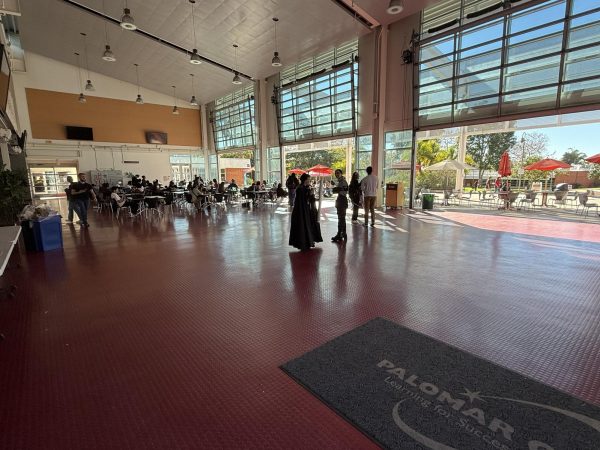
As a result, the Student Union lacks the consistency expected of a space meant to serve as the heart of campus life. Designating a section exclusively for student seating and maintaining a consistent number of tables and chairs — even during events — would help restore reliability and allow students to gather as a community when they need it most.
At the Feb. 18 Governing Board meeting, officials opted to spend some of the last money from a $694 million Proposition M bond approved in 2006 on the Student Union. Funds are not slated to update the Student Union, but will add some new furniture, according to Chris Yatooma, the interim vice president of finance and administrative services. But down south, neighboring colleges are spending more.
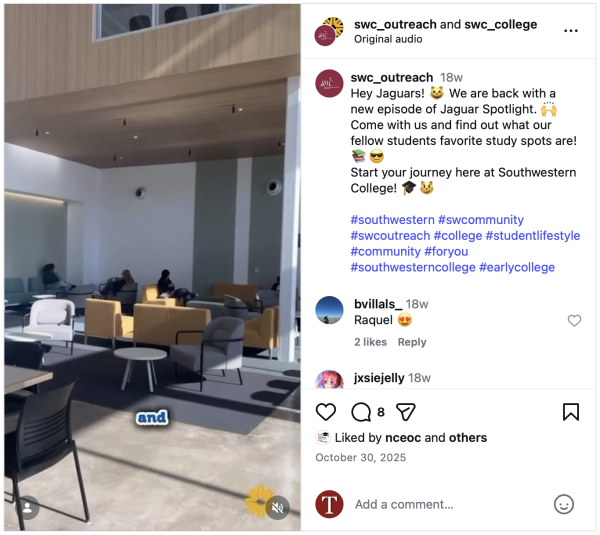
Local community colleges across San Diego County have renovated student spaces to make their campuses more accessible and welcoming. Southwestern College, in Chula Vista, for example, rebuilt its Student Union using Proposition Z funds, beginning renovations in 2023 and reopening in September 2025 with expanded programs, including Culinary Arts and a new health and wellness center.
Without reliable seating, outlets, and lighting, a space meant to bring students together risks doing the opposite — contributing to a campus that feels fragmented rather than connected. Palomar’s sense of community depends on having shared spaces that students can rely on.
If the Student Union simply offered reliable seating like couches or comfortable armchairs and charging ports, as seen in the library building, the large building would attract more students. Even with just simple fixes students could have a more welcoming and comforting environment for studying, talking, or even just taking a rest break in between classes.
By prioritizing student access during events and investing in simple upgrades such as designated seating, charging outlets, and improved lighting, the college can immediately improve the Student Union’s function. These small changes would signal that students’ needs come first — and that the space truly belongs to them.