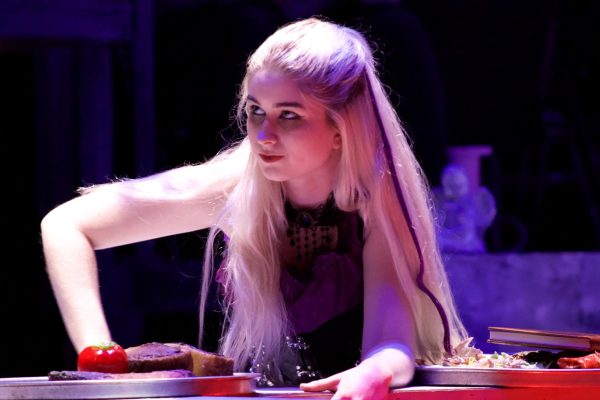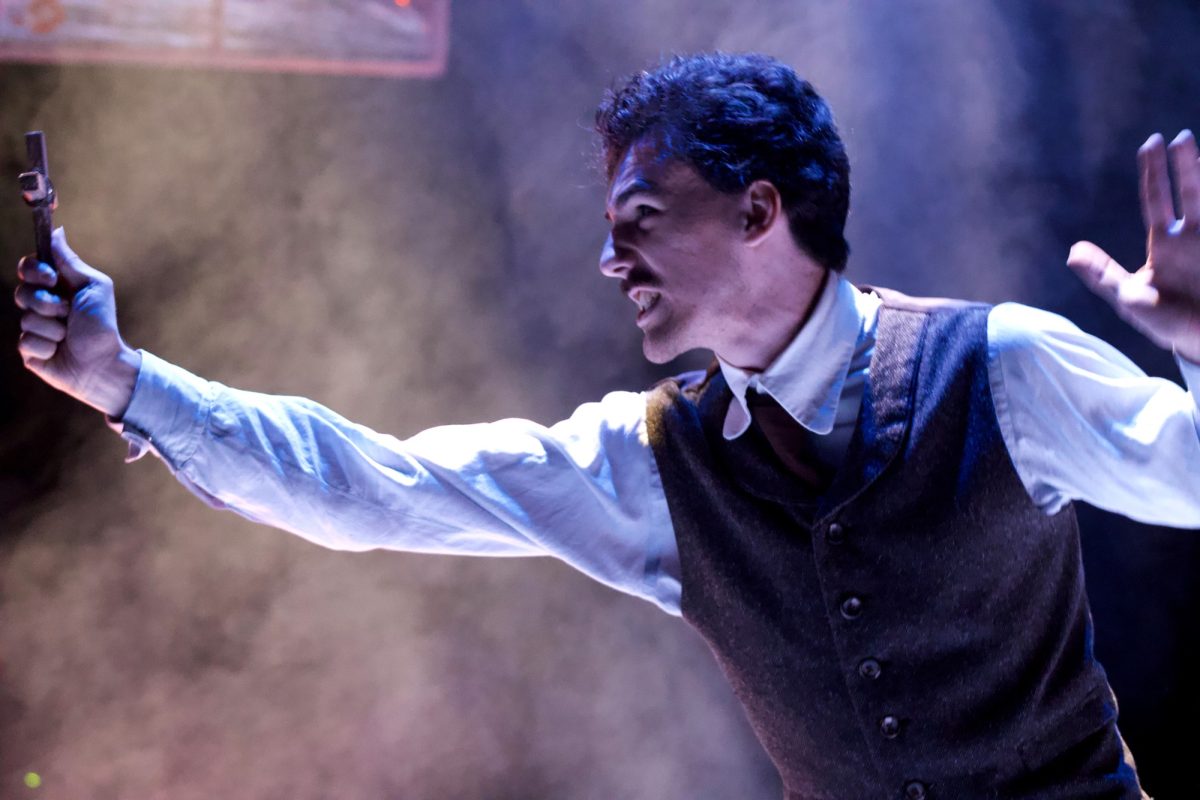
A splash of blood, a scream from just feet away, and a familiar story turned on its head — this feminist reimagining of Dracula pulls audiences into an intimate, high-intensity horror experience.
“Dracula: A Feminist Revenge Fantasy, Really,” adapted by Kate Hamill, blends immersive staging, physical stunts and gender-swapped roles to deliver a bold, modern take on the classic tale, though its volume, mature themes and uneven technical moments may not land for every viewer.
The production reimagines the traditional narrative by reversing the roles of Jonathan Harker and Mina Harker, placing the wife in the role of savior instead of the husband. Dr. Van Helsing, typically portrayed as male, is also played by a woman. These choices do not drastically change the story, but they do shift the focus, empowering the women involved and reframing who holds control.
Itzel Cortez portrays Van Helsing with strength, though at times, as a newcomer, a bit of nervousness comes through. This, however, can read as a layer of urgency or concern within her character, adding to the tension rather than detracting from it.
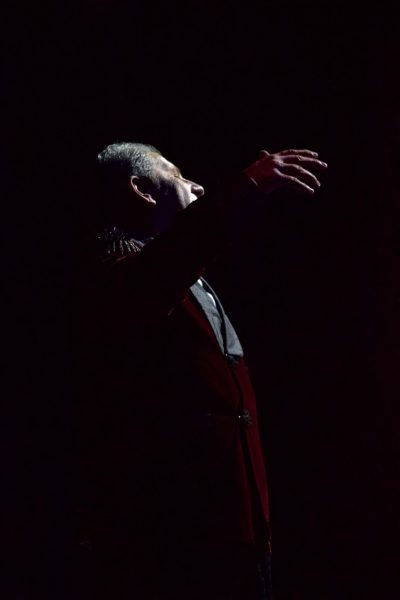
Nicholas Ashley, who plays Dracula, keeps audiences engaged with a tone that leaves them on edge, never quite sure what he is scheming next. His soothing accent draws the audience in, often making it feel as though he is speaking directly to you. It’s an unsettling but effective choice.
The dark lighting locks you into dimly lit corridors, creating a constant sense of suspense. Eerie fog effects and hidden doors around the stage make it impossible to predict when or where vampires will appear. The production leans heavily into physicality, and it pays off. From flips to spins, the stunts are impressive and often shocking. One particular moment, where Jonathan Harker (Sean Zukowski) is slammed to the ground, visibly spreads worry across the audience.
The performances extend beyond the stage, with actors moving through the aisles and directly interacting with audience members. Some seats are even placed onstage, creating a fully immersive experience. Actors sit near audience members’ feet and make direct eye contact, reinforcing the feeling of being part of the story.
Be warned: viewers in the front row may get splashed with fake blood. The use of gore throughout the play adds intensity to several scenes, though it may not be suitable for all audiences.
Because of the small studio space, the production can also be overwhelming at times. The actors’ screams, along with the stomping and slamming from stunts, are loud and can be startling, particularly for those with sensitive ears or for younger viewers.
The show features instrumental modern rock music that helps build suspense, especially in the opening scenes. However, during Van Helsing’s fight sequences, the music becomes noticeably louder and begins to distract from the action. The shift creates a slightly mismatched tone, pulling attention away from what should be a key moment.
Overall, “Dracula: A Feminist Revenge Fantasy, Really” is an engaging and immersive production that thrives on its bold performances and inventive staging. While certain technical elements, like sound balance, could be refined, the show succeeds in delivering a fresh, high-energy take on a classic story.
This is a production best suited for audiences who enjoy interactive theater, intense staging, and a darker, more modern interpretation of familiar material.