
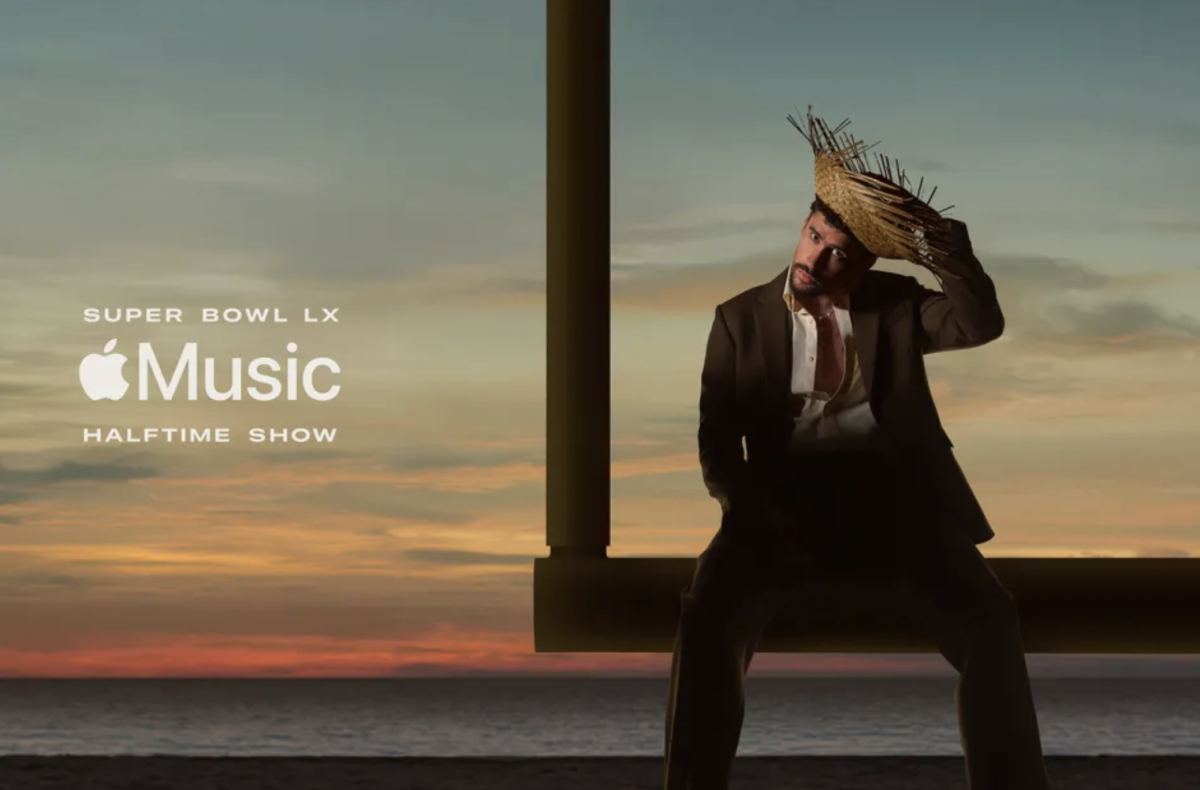
Headlining the Super Bowl is not a detour from solidarity; it is public defiance — a raised middle finger to a conservative movement that polices bodies, borders, and culture on TV every Sunday. The scale is the entire point.
Only months ago, Bad Bunny explicitly stated his intention to avoid touring the United States.
“But there was the issue of — like, fucking ICE could be outside [my concert]. And it’s something that we were talking about and very concerned about,” he told I-D Magazine.
This commitment makes his decision to accept the most-watched, most-American event of the year raise the essential question: Is this a hypocritical cash-grab? Absolutely not. His performance, a calculated pivot, is an escalation. He has moved his fight for immigrant safety from a hidden boycott to a powerful, undeniable, political confrontation on America’s biggest stage.
The Super Bowl stage transforms from a performance space into a political pulpit. Why this stage matters is simple: it is live TV, carrying an estimated 100 million viewers, with halftime iconography that commands global attention.
He has moved the battleground from a local concert venue—where ICE activity is a silent, real threat to the global spectacle, making his defiance as loud and undeniable as the event itself.
Predictably, this calculated move has drawn intense backlash from the political right, led by figures like Corey Lewandowski. The advisor to the Department of Homeland Security called out the NFL on “The Benny Show” for selecting an artist “who seems to hate America so much to represent them at the Halftime Show.” Good.
The provocation worked. Lewandowski’s subsequent statement, proves Bad Bunny’s entire point. Furthermore, the very fact that his right-wing critics question his patriotism exposes a deeper prejudice: they see brown skin and assume “foreign,” revealing their failure to recognize that Puerto Ricans are Americans, and that Bad Bunny’s presence is a fight for visibility, not entry.
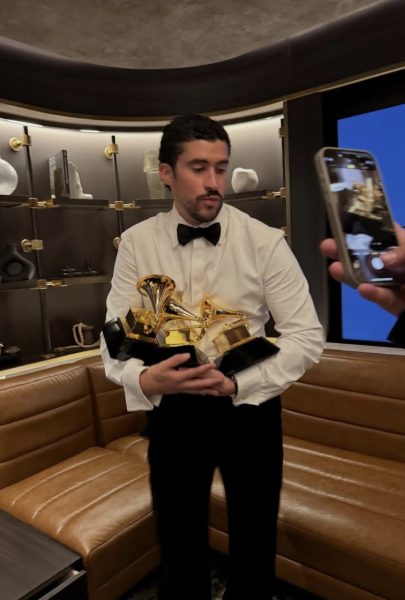
At last week’s 2026 Grammys, when Bad Bunny took the stage to accept Best Música Urbana Album, he didn’t start with a “thank you.” He looked directly into the lens and stated, “Before I say thanks to God, I’m going to say, ICE out.”
After the crowd calmed down, he ended his speech with saying “We’re not savage, we’re not animals, we’re not aliens,” he said. “We are humans and we are Americans.”
Bad Bunny has chosen to use the biggest platform in America to stay loyal to his people. We saw Kendrick Lamar deliver a politically charged performance at this event; we know it is possible, and it is what we expect.
This is what the “middle finger” looks like in practice: Spanish onstage, immigrant narratives, and visuals that ICE cannot sanitize—bodies and flags that refuse erasure. His every move will be scrutinized, but the message must be one of public confrontation that defines the current cultural moment.
While his die-hard fans appreciated his initial boycott, not all voices are happy. Some critics view the Super Bowl decision as a betrayal of the principle he initially fought for.
To them, it looks like a “cash-grab.” Yet, the decision to step onto the largest platform, knowing he is inviting the largest possible political risk—a public confrontation with Homeland Security advisors—is the opposite of safe money. It shows Bad Bunny is operating with the ultimate goal in mind: reaching the maximum number of hearts and minds, regardless of the cost.
This is the ultimate confrontation. You can heckle a tour; you can’t drown out a halftime broadcast carried to 100 million-plus viewers. Bad Bunny is not asking for permission to exist in America’s living room. He’s taking the remote. When the lights hit and the broadcast rolls, the country will have to listen. That’s the point.