
Everyone struggles with managing their time, especially college students. With juggling classes, jobs, and the occasional crash out, there is hardly any room to balance it all. The American Psychological Association reports that 80% to 90% of college students fall victim to procrastination. Being organized is the key to gaining back some free time and getting rid of last-minute stress. Luckily, making simple changes to habits can make time management turn from a negative feeling to a positive one.
Get a Planner
Your brain can only handle so much, so try writing it down. Whether you use a planner, calendar, or even the Notes app, just get it all out. By using a planning tool of choice, you can easily keep track of sneaky deadlines. You will also be able to see what days are packed, so you can make the changes needed to plan your time effectively.
Make a To-Do List
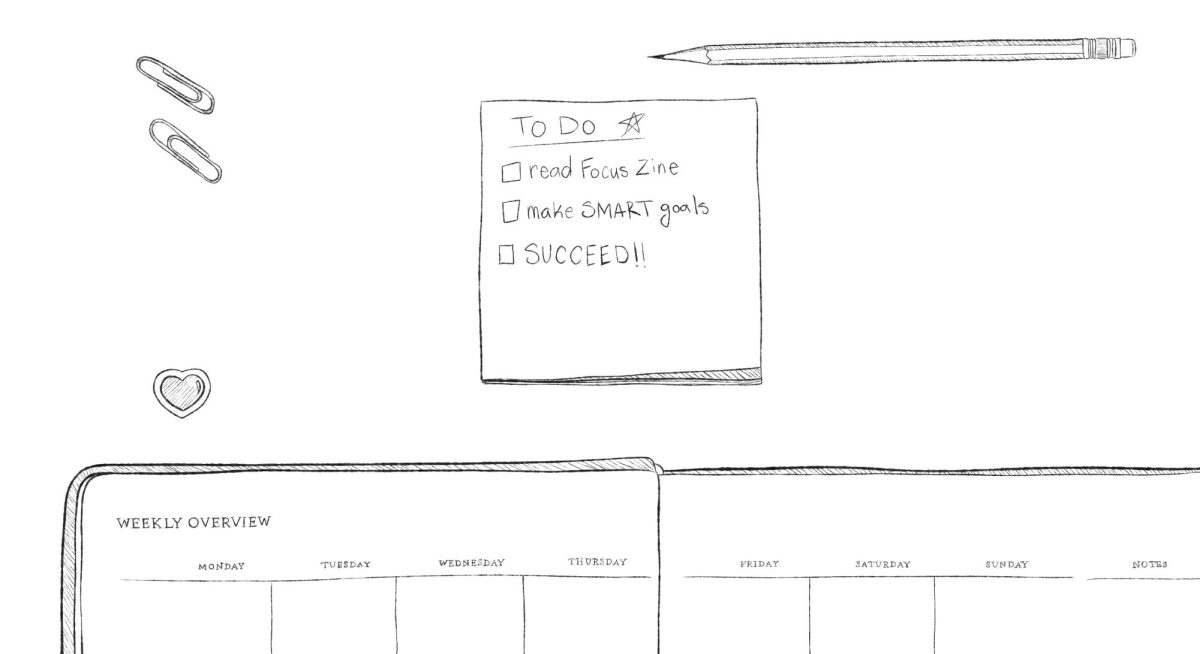
Start the week off by creating a to-do list. Write both big tasks and small tasks, even something simple like “buy coffee.” Putting a check mark next to tasks can motivated you to keep going and get everything done. People who write down their goals are 42% more likely to achieve them than those who do not, according to Gail Matthews, a psychology professor at Dominican University. Try starting with small tasks, then moving on to the big ones, to feel less overwhelmed. After completing a task, seeing the check marks is more than just a task off the list — it’s motivation to stay locked in.
Set Goals
Large goals like passing a class or getting an internship are good,
but try breaking them down into small SMART goals. Making specific, measurable, achievable, relevant, and time-bound goals, or SMART goals, keeps you motivated to stay on track. SMART goals create a clear timeline and keep track of progress according to Atlassian. “Write two paragraphs today” is better than “finish 10-page paper later,” especially when the hardest part is just getting started. Creating these goals makes sure that they are reachable and can be completed within your time frame.
Take One Step at a Time
Breaking down a task into steps makes it easier to finish. Focusing on a current task and sticking to your schedule will help put a stop to mental burnout, according to Strayer University. Leading up to a due date, doing a few steps each day makes sure you’re not leaving everything to the day of. You can’t run before you learn to walk. The same goes for assignments. Break the essay into sections, the project into tasks, and give yourself small deadlines before the big one rolls around. By doing an assignment one step at a time, you can spread out the work and stop it from piling up.
Be Realistic
We’ve all said, “I’ll do it tomorrow.” Then tomorrow becomes next week, and suddenly you’re having a full-blown 11:59 p.m. emergency. Be real about how long things actually take —and give yourself twice as much time as you think you’ll need. Become flexible and fix your schedule to set that time for doing work. Leave yourself with more than enough time to complete an assignment instead of less. Avoid procrastinating so you can create the best version of your work. Your future self will be relieved, not panicking, and thankful.