
Read in Spanish here | Lee en español aquí
If you skip “Pastorela Fronteriza,” you’re skipping one of the few Christmas shows brave enough to put devils, border jokes and an angel in huaraches on the same tiny stage and actually make it work.
Staged in the round — with the audience on all sides and the action in the center —the production turns the small theater into a borderland nativity that feels as current as today’s headlines and as rooted as a holiday tradition passed down through generations. It’s well aimed at anyone looking for a Christmas story with both heart and a spine.
Written by Carlos Morton, “Pastorela Fronteriza” takes the classic Mexican pastorela and drags it to the U.S.-Mexico border. The shepherds are supposed to be heading to Belén (which is apparently near Carlsbad), but they keep getting sidetracked by borderland temptations: a shopping mall, a too-slick Santa, and all the distractions that come with modern life. The Angel and the devils fight over their souls while the script mixes faith, social commentary and hope, told with a surprising amount of comedy.
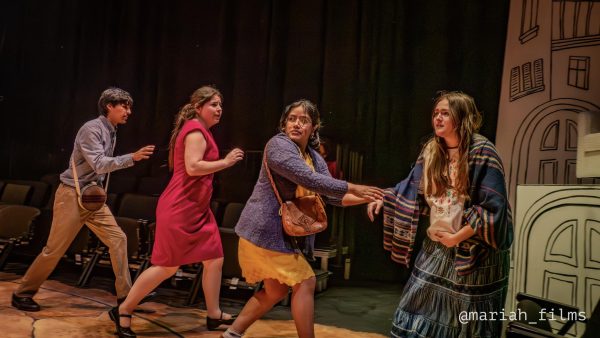
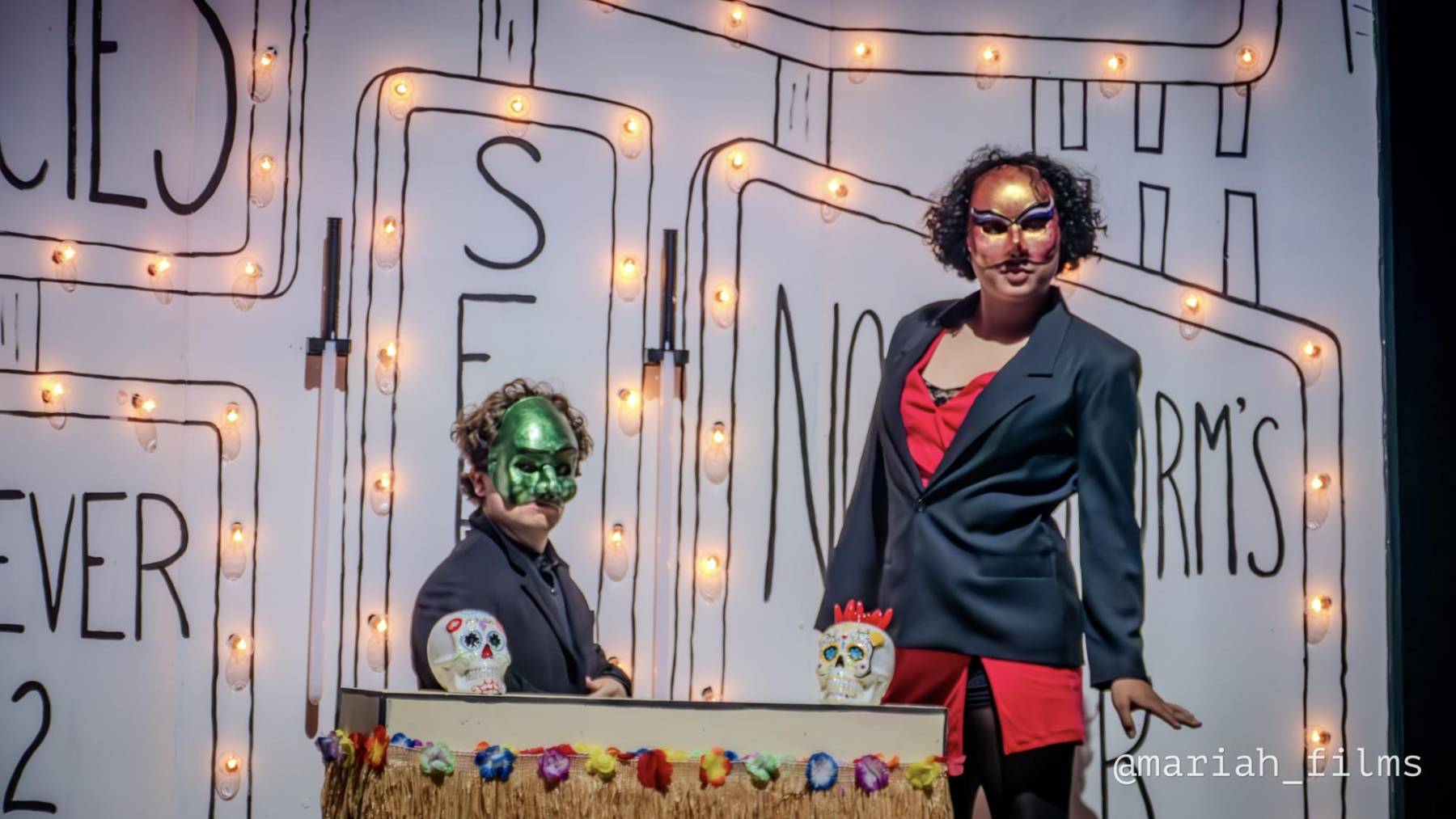
From the moment I stepped into the theatre, it was clear the atmosphere was carefully built. Lighting and staging establish the border setting, while a light mix of Latin music and Spanish Christmas songs fills the space. Even with a minimal set, the design feels specific and intentional, and props are used sparingly, yet effectively.
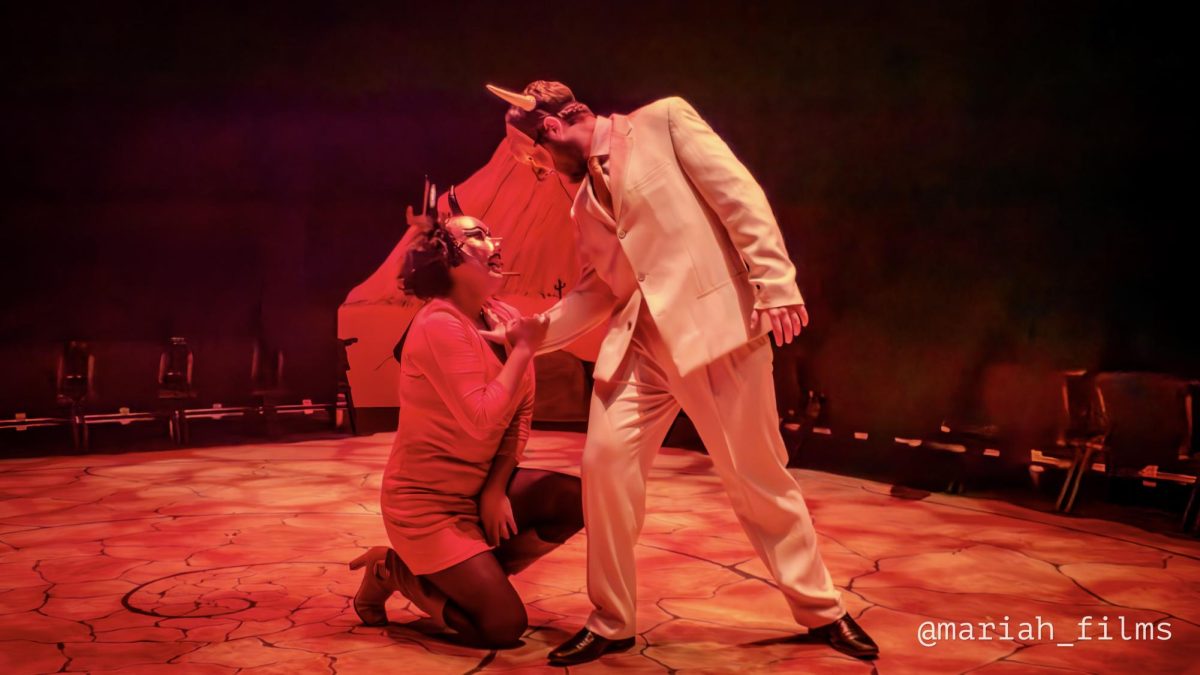
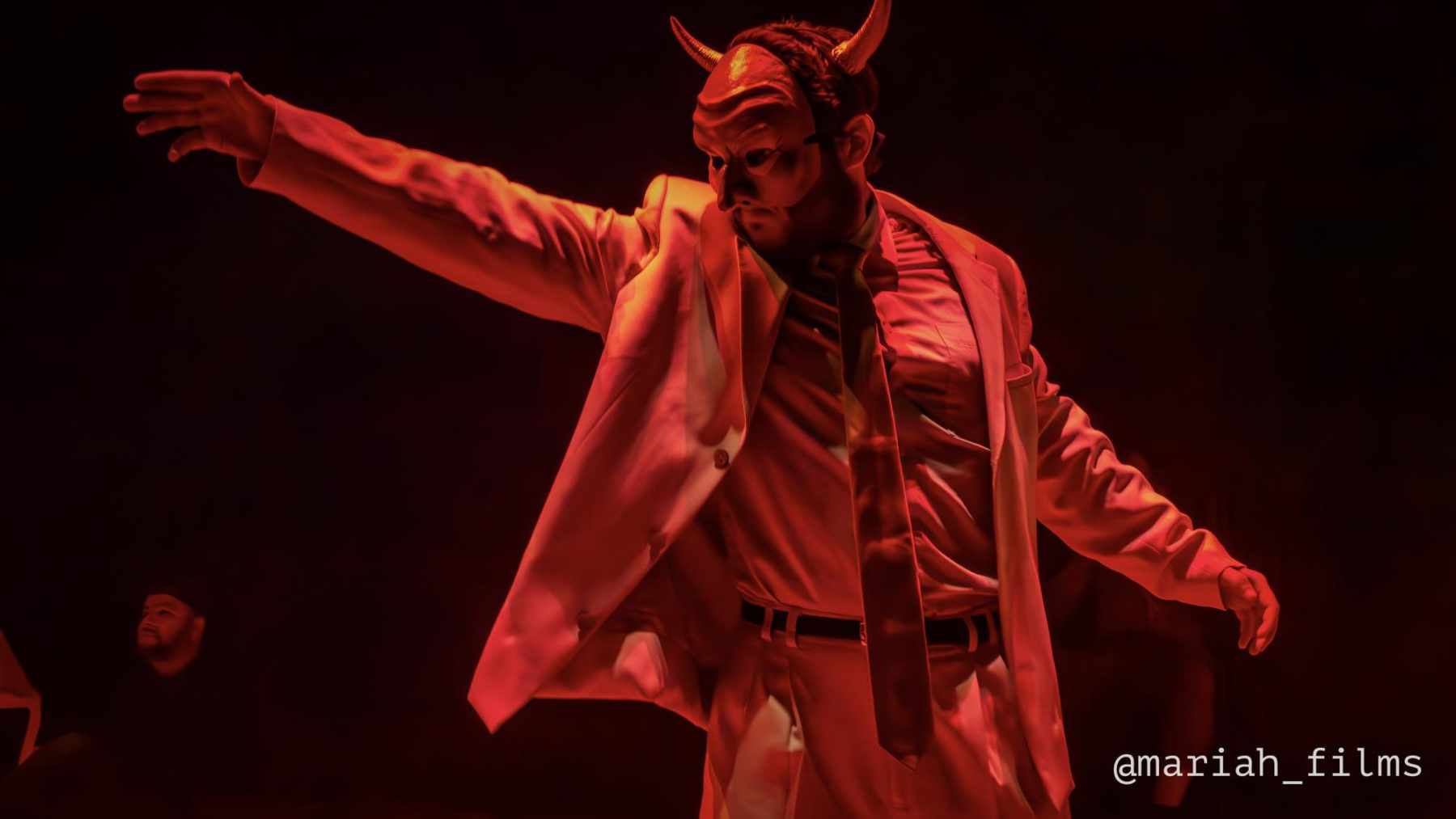
Within that world, the Infernal Cantina crew steals the show: Owen Hall as Lucifer, flanked by his demons, Chavita Notez as Astucia and Joshua DePaul as Beelzebub (Baba), form a dynamic trio whose scenes are consistently funny and grounded. Their physicality, timing and chemistry keep the “villain” side of the story from sliding into cartoon territory; they’re big and theatrical, but still believable within the world of the play.
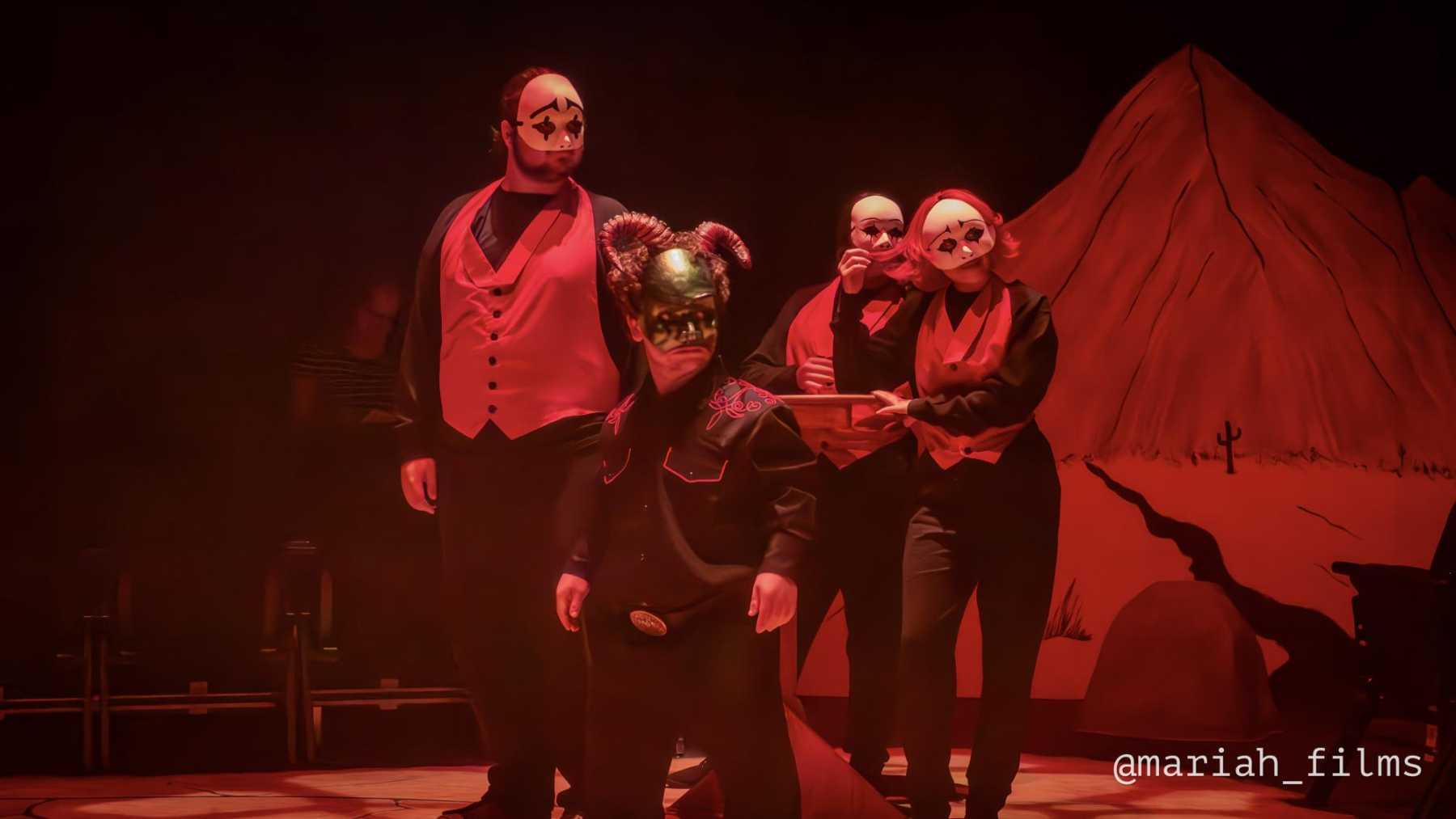
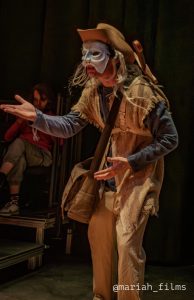
Visually, the costume design ties everything together. Every character reads unmistakably as rooted in Mexican culture without drifting into caricature. The Angel is a standout: long silver hair, leather huaraches, a threadbare vest and a wide-brimmed hat clearly echo the iconic Mexican “viejito” characters. Paired with Gavin Christensen’s bent, shuffling mannerisms, it’s a reference that lands instantly for anyone familiar with that folkloric figure while still being legible to those who aren’t.
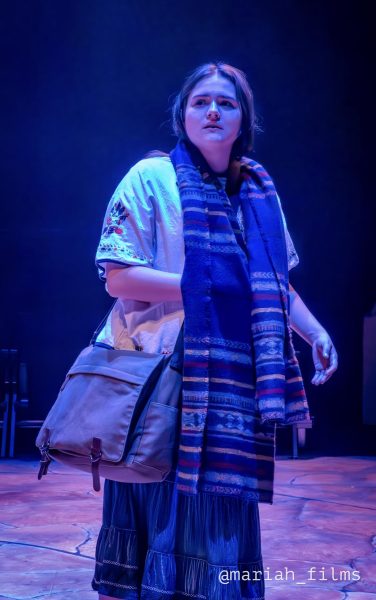
Music and sound slip in more gently, but still leave an impression. The a cappella songs don’t turn this into a full musical; instead, they feel like folkloric storytelling through song, sliding in and out of the rhyming spoken lines naturally. As Gila, Brianna Soto brings a bright, clear voice that carries easily in the intimate space, and her performance hits right at the emotional core of the story.
The script itself is a major part of the production’s charm. “Pastorela Fronteriza” plays like a blend of Shakespearean-style rhyming prose in English, with Spanish woven throughout. Pop culture jokes and local references pop up alongside biblical and border imagery, keeping the tone lively. You don’t have to be bilingual to follow the story, but some of the best punchlines and nuances land best if you understand at least some Spanish.
The playbill and director’s welcome to the audience are in both English and Spanish, a small but important signal about who this production is centered on — not just English speakers visiting a bilingual event, but bilingual and Spanish-speaking audiences, too.
It also matters that this piece sits inside a long tradition. Pastorelas are a historic form of Mexican Christmas theater, used for generations to teach Christianity through allegory, humor and community performance. This version respects that framework while reshaping it for contemporary audiences: its angels and devils don’t just argue over abstract souls, they echo immigration politics, border enforcement, modern temptations and what “good Christians” actually do in practice.
Because the show is staged in the Studio Theatre in the round, it comes with the usual tradeoffs. The upside is a very intimate, up-close experience; actors are often just a few feet away, and the audience feels pulled into the journey of the shepherds and torments of the demons.
The downside is practical: depending on where you sit, some parts of the set and action are harder to see, and there are moments when dialogue or singing is briefly lost as actors turn or move to the opposite side of the playing space. I found myself wishing for clearer sightlines in a few key moments, but it felt more like a limitation of the room than a flaw in the production itself.
This is not a Christmas show built on easy sentiment and twinkle lights. “Pastorela Fronteriza” is for anyone who feels modern-day Christianity has lost some of its moral clarity, who wants a holiday story that offers both laughter and something to wrestle with afterward, or who are open to a bilingual and culturally specific piece that doesn’t slow down to explain itself.
The production isn’t perfect, but it is smart, funny and politically awake without losing heart. In a small studio with a minimal set and a committed cast, “Pastorela Fronteriza” manages to honor a tradition while speaking directly to current audiences.
Performances of “Pastorela Fronteriza” run Dec. 5–14 at the Studio Theater. For tickets and details, visit the Palomar Performing Arts website.