

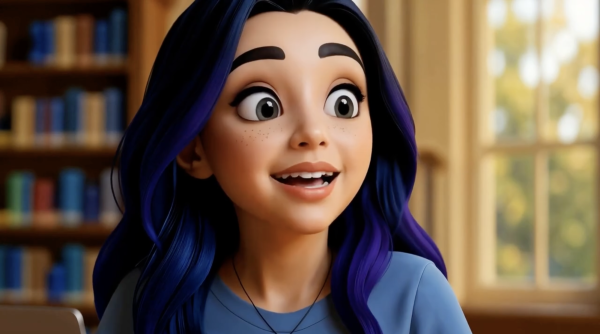
On Sept. 9, the official Palomar Instagram account posted a video on their page that stood out to me. The video talks about the new common course numbering system that has gone into effect across California Community Colleges.
What stood out? The video was made using AI.
As a student who has taken classes in the media studies department, this was shocking to see. It was shocking because Palomar offers courses that teach animation, but instead chose to hire a company to create an AI animated video.
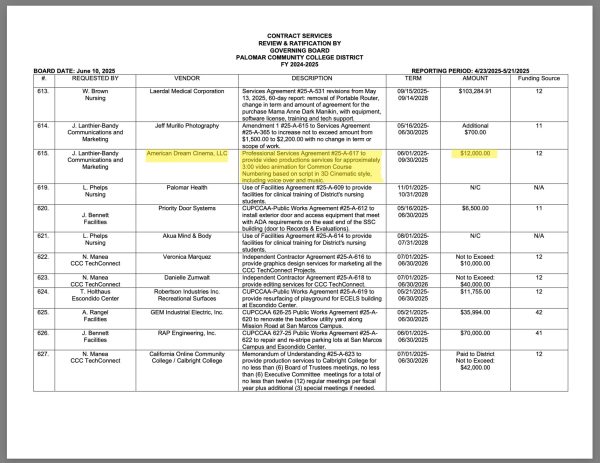
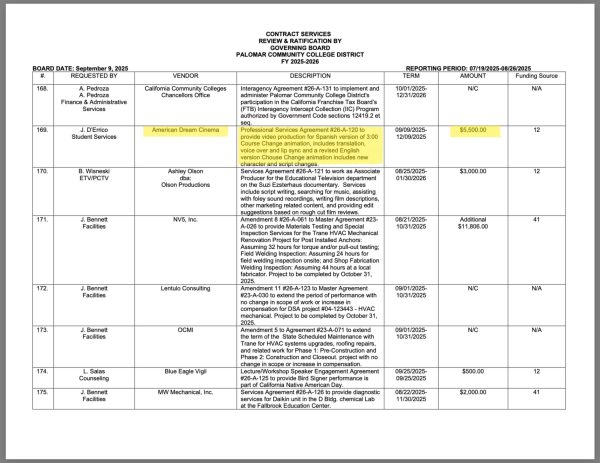
What I learned later that night left me in disbelief. At their June 10 meeting, the Palomar governing board approved $12,000 to be paid to American Dream Cinema, LLC for the creation of the aforementioned AI video. The governing board also approved the company to be paid $5,500 for a Spanish translation of that same video just hours before at the September meeting.
$17,500 for two three-minute videos. $17,500 that could have gone to the arts, media, and design department to benefit students who are developing their skills without the use of AI.
This is the first time that I have seen the Palomar social media page post a video by AI. Previous Palomar videos featured student ambassadors, real people or B-roll of its campus along with music.
Just a few weeks ago, Palomar posted a video of a student ambassador speaking about the Cal-GETC pathway. I’m sure this video did not take much time or money to do. So, even if the college wanted a change in style, surely they could have commissioned a student animator to get the job done.
I would have preferred to see two actual students having the conversation that was depicted in the video. There are a variety of artists at Palomar: animators, graphic designers, filmmakers, actors, and more.
The Palomar website does not have data on how many students are enrolled in the arts, media, and design department, but there are a range of courses and associate degrees offered. These include graphic design, digital video, digital imaging, multimedia design, and many others. The Digital Imaging and Multimedia Design degrees offer courses that teach motion graphics and digital 3D animation.
I am not the only student who is disappointed by Palomar’s commissioning of AI. Current and former students expressed their dissentment through the comments on the Instagram post.
“Why use ai for this when you have actors and animators and REAL artists on your campuses…as a past student this is extremely disappointing to see,” one commenter wrote.
Another comment came from a student who said they would allegedly be dropping out because of the use of AI.
I am aware that there is no escape from AI in this day and age, but it’s frustrating that a college that offers animation courses did not give its students an opportunity to create the video for them.
AI-generated videos are lazy and lack creativity. It is also harmful to the environment.
AI text models like ChatGPT have to be trained before they can answer prompts for you. According to a study by the Massachusetts Institute of Technology (MIT), it is estimated that it took over $100 million and 50 gigawatt-hours of energy to train OpenAI’s GPT-4. This much energy could power the city of San Francisco for three whole days. That is just from the training process.
MIT also researched how much energy it takes to make a video with AI. OpenAI has Sora, a video generation model. MIT found that its newest model uses over 30 times more energy on a 5-second video, an amount comparable to running a microwave for over an hour.
I can only imagine how much more energy it took for American Dream Cinema to create two 3-minute AI animated videos. I also believe that the video wasn’t perfect on the first try. You have to tweak things to your liking with AI generated videos or photos.
Palomar should be setting an example for its students on the use of AI, not wasting district dollars on unsettling AI animated educational shorts. The college needs to have some accountability for their actions that send the wrong message to the students it’s meant to serve. Palomar needs to give its students the opportunity to showcase their creativity and talent. As students, let’s send a message: we won’t accept this. Comment on the video. Let them know the harm it does and the message it sends.