

Accustomed to the old method of ordering, customers in the Comet Café wandered around the food court disoriented.
PFD Management Inc., Palomar’s new food contractor, requires students to fill out a checklist at each food bar. Previously, students simply stood in line and placed their orders with staff at each station.
This new process ostensibly appears more effective due to its avoidance of lines and elimination of the face-to-face step of ordering.

But when the lunchtime rush hits, students need to get in and out quickly to make it to class, and the new system often doesn’t allow that to happen.
First off, there is no signage, nor was there an email sent out, detailing how the new process works. Instead, it was implemented and metaphorically thrown into students’ faces to figure out on their own.
This led to multiple customers coming in to buy food, standing by their booth of choice, and then leaving after a few minutes because no one asked what they would like to order, as was customary for the previous food contractor’s staff to do.
The other issue with this new approach is that, without being able to see physical lines of people waiting to order, it is considerably more difficult for students to gauge whether or not they have enough time before their next class to get the food they want.
This wouldn’t be an issue if there were enough grab-and-go options available. However, by 12:40 p.m. on Aug. 28, most of those grab-and-go options were gone. One of the last items left available was a meager salad ranging from $8.25 to $8.75, depending on your choice of toppings.
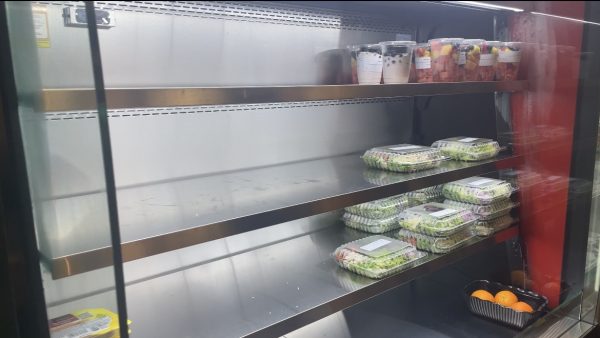
Last semester, I would routinely order a large pizza slice for less than $5 and would spend less than three minutes in the cafeteria to do so. Now, if you need something as quick, filling and affordable as that, you may not be able to find it.
Beyond efficiency, allergen transparency is critical to any food establishment. Yet in the cafeteria, no allergy warning signs could be found.
As someone who is allergic to sesame, it was concerning to see that the pork and vegetable potstickers, an item likely to include this allergen, had no ingredient information listed on the packaging.
I asked to speak with the head chef of the café and inquired about whether or not the potstickers had sesame in them.
At first, her answer was a definite no. Only when I asked again did she decide to go to the kitchen and double check. She returned with a reformed answer, telling me that the food item did in fact have sesame oil in it.
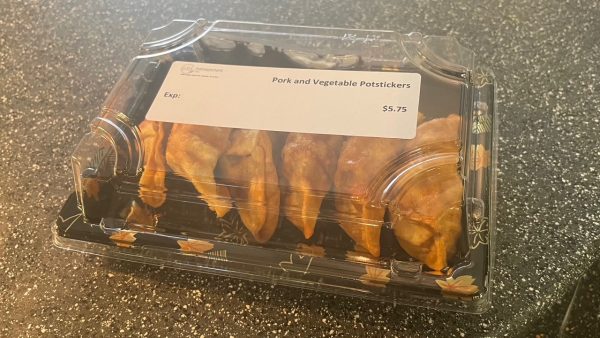
They may still be in their inaugural weeks of operation, but some things are inexcusable. Withholding ingredient and allergen information is not only putting the health of our students at risk, but is also illegal at the state and federal level.
According to the California Department of Public Health, “All packaged foods composed of two or more ingredients are required to include an ingredient list.”
But ingredient lists are not the only thing they are missing.
According to the United States Food and Drug Administration, “FALCPA (Food Allergen Labeling and Consumer Protection Act of 2004) requires that foods or ingredients that contain a ‘major food allergen’ be specifically labeled with the name of the allergen source.”
On April 23, 2021, sesame was declared as the 9th major food allergen. Labeling and manufacturing requirements for this change went into effect Jan. 1, 2023. Therefore, there is no reason for sesame, or any of the other major food allergens for that matter, not to be listed on the prepackaged foods being sold in the café.
There is only so much grace that can be given for it being the first few weeks of the semester. The rest equates to poor planning, training and low standards.
Hopefully things will improve in the weeks to come, but there are certainly some corrections that need to be made by PFD Management Inc. to ensure that our students’ needs are met and their safety prioritized.