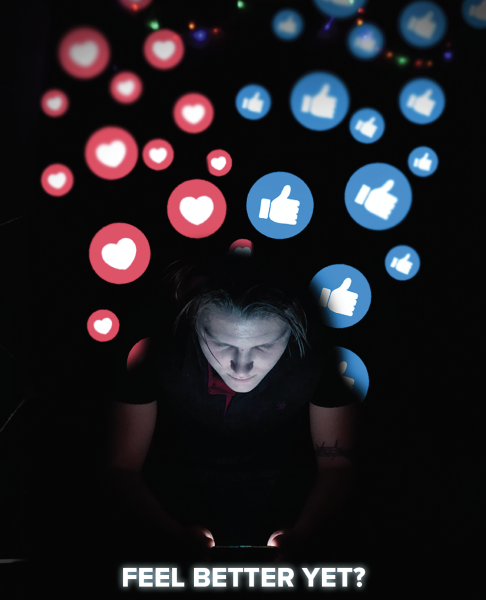

It starts with one scroll. You pick up your phone for a minute, and before you know it, an hour has passed. You end up watching people who seem to have perfect skin, perfect bodies, and perfect lives. Even if you know it’s not all real, it still has an effect on you.
Social media has changed how Gen Z and upcoming generations of teens and young adults see themselves, and not in a positive way. Aside from influencing people, it can alter reality. The issue isn’t only that people share their best moments. Most of what we see isn’t even real in the first place.
 It’s not just a feeling; there is data to back this argument. About 46% of teens say social media makes them feel worse about their body image, according to a U.S. Surgeon General Advisory.
Additionally, around 40% of teenagers say it makes them worry about their appearance, according to a BYU Ballard brief. That’s nearly half of the teenagers in the United States.
What makes this worse is that younger generations didn’t just start using social media — they grew up with it. Gen Z is the first group to spend almost all their teenage years online, and it affects them in unique ways.
Constant exposure matters, especially since those are the years when teenagers and young adults are figuring out who they are and learning to feel comfortable in their skin. Research shows that heavy social media use is linked to higher levels of anxiety, depression, and lower self-esteem in young people.
A Yale Medicine study states that the brain continues to develop between ages 10 and 19, and that frequent social media use can alter emotional regulation and self-worth during these years.
It’s not just that “phones are bad” — it’s that young adults and teenagers have been exposed to unrealistic standards at the exact time they are most likely to believe them.
What’s surprising is how normal it starts to seem. You see people always traveling, wearing designer clothes, and following perfect routines; it begins to feel like that’s how life should be. When your own life doesn’t match up, and it usually won’t, you start to feel like you’re doing something wrong.
Influencers are a big part of the problem. People often think influencers are just regular people who got lucky, but that’s not really the case anymore. What they post is more like a brand. Everything is planned, from what they wear and where they go to how they pose and even how “natural” they appear.
Exposure to influencers can trigger social comparison, fear of missing out, and materialistic thinking, which can, in turn, encourage conspicuous consumption, according to a 2024 Heliyon study.
That means influencers are not just posting pretty content — they are helping shape a culture where looking wealthy, polished, and successful becomes something people feel pressured to perform.
 The glitz and glamour influencers promote on social media are not always their real life. Without brand deals, they could not live the life they promote. Influencers aren’t promoting realistic lifestyles; they’re putting on a show that they’re getting paid for.
No one is directly saying “you’re not good enough,” but after seeing the same content again and again, you begin to think it yourself. You start criticizing your face, your body, and your lifestyle. Things you never worried about before suddenly seem like problems.
And honestly, most of what young adults and teenagers compare themselves to is edited. People use filters, Facetune, special lighting, angles, and even take multiple tries just to get one “casual” video.
When you think about it, it’s all curated, edited and manipulated. Younger generations are comparing their real lives to something that took multiple attempts and editing apps to look perfect.
Constantly comparing yourself to others affects you more than most people admit. It can make you feel insecure, anxious, and unsatisfied with yourself.
The hardest part is that you often don’t realize how much it’s affecting you until it already has.
I’m not saying social media is all bad. It can be fun, help people connect, and even be inspiring at times.
But pretending it doesn’t have serious downsides, especially when it comes to mental health, is just ignoring what’s right in front of us.
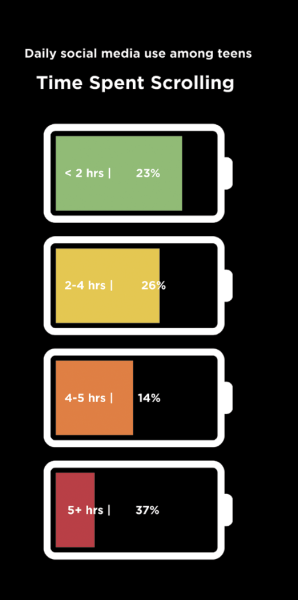 Statistics show that teens who spend more than three hours a day on social media are twice as likely to struggle with anxiety and depression, according to the U.S. Surgeon General. So this isn’t just about people being too sensitive — this is a real problem for younger generations.
Teenagers and young adults are constantly exposed to and consume unrealistic standards and lifestyles shown on social media, such as wealth, body image, and unattainable expectations, which are altering their perspective on life.
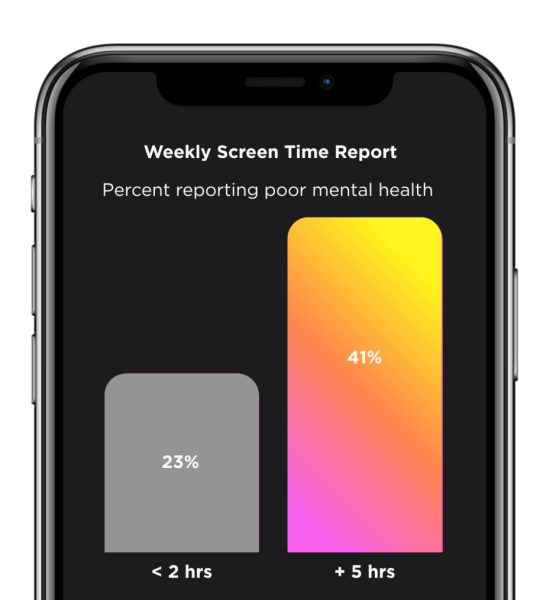
Teenagers average around 4.8 hours a day on social media apps like YouTube, Instagram, and TikTok, according to a Gallup poll. Additionally, 41% of teens with the highest social media use rated their mental health as poor or very poor.
Social media has drifted us out of reality and into a filter bubble.
At some point, we need to be honest about what we see every day. If we keep comparing ourselves to things that are filtered, curated and edited, we’ll always feel unsatisfied.
The problem isn’t that we aren’t good enough.
It’s that we’ve subconsciously compared ourselves and our lives to something that was never real in the first place. Do not fall for the social media picture-perfect propaganda. Comparison is the thief of joy.