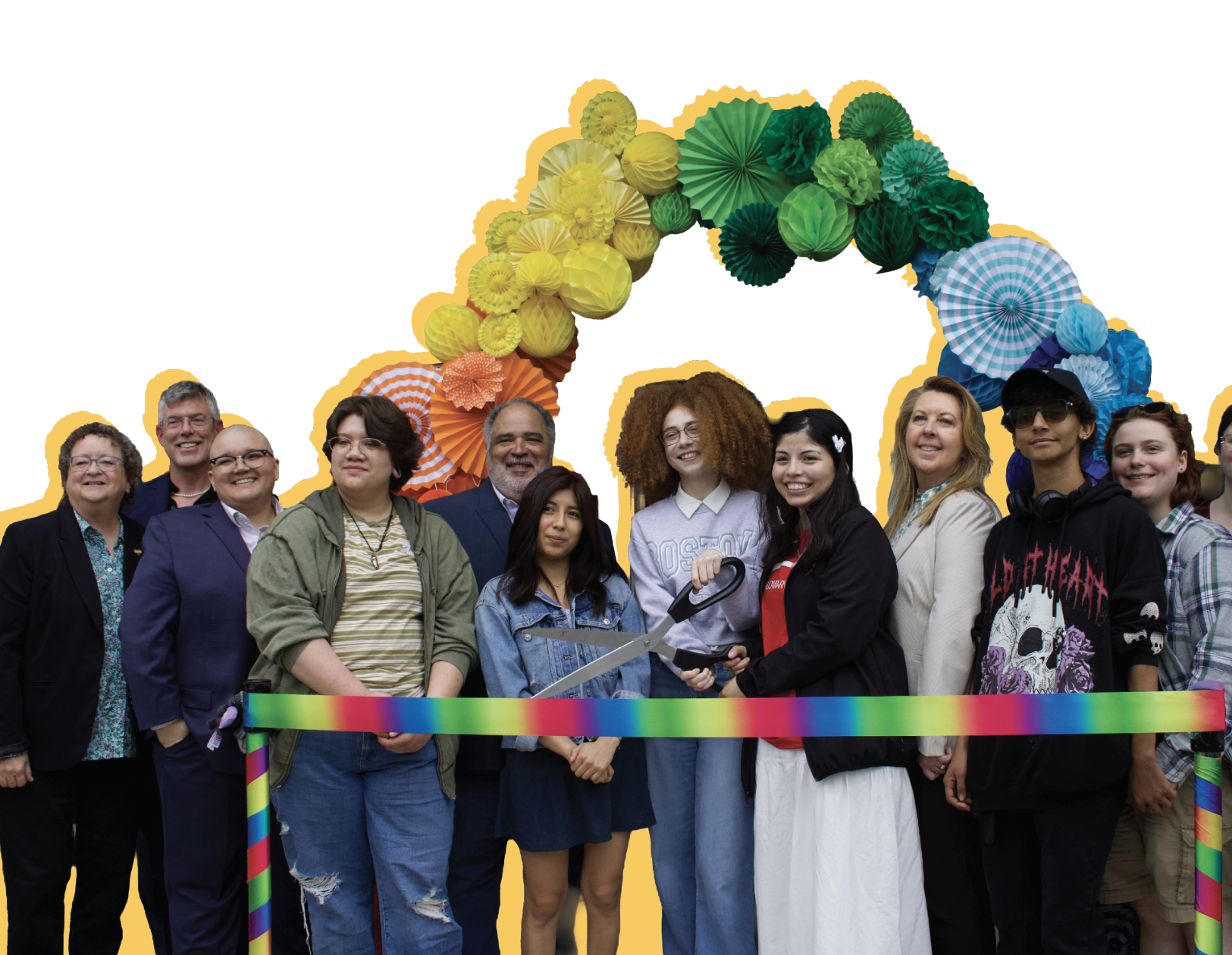

The San Marcos campus of Palomar College is a sprawling maze of mid-century concrete and modern glass, a place where thousands of students are perpetually in transit. But if you walk toward the Student Union, there is a new door, labeled SU-17, and behind it lies a space that feels less like a government office and more like a collective sigh of relief.
It started in 2010 as a defense against heinous homophobic incidents on campus. Today, the Palomar Pride Center has moved into a permanent, high-traffic facility in the Student Union, proving that at a community college, a room is never just a room.
Spain Graves, a student who has frequented the Pride Center for three semesters, noted the upgrade in the environment. “The old center had just a table, which I would normally sit at,” Graves said. “Now it’s like, ooh, we have like, nice cushions and stuff.”

In April 2026, the Palomar College Pride Center relocated from ST-17 to its new facility in SU-17. While ST-17 served as the center’s initial home, the program eventually outgrew the space. According to a Palomar News article “Palomar Expands Pride Center,” the Pride Center now serves a community representing nearly 20% of the total student population, making the move to a larger footprint a logistical necessity.
While the new center offers more physical space, its opening also marks the end of a years-long effort by students and faculty to secure a permanent campus home.
For many, the facility represents the culmination of a long struggle to move the community from the margins of campus life to its center.
When you enter SU-17, you don’t feel cramped in a small area. There are flyers for local gender-affirming healthcare, stacks of zines and the low hum of students who finally have enough square footage to exist without bumping elbows.
Alexander Vallve, a student who has seen the center’s growth, noted that while the square footage has changed, the soul of the resource center remains.
“Something that we do have consistent between both is that we still have a lot of queer history and books,” Vallve said.
For years, the Pride Center operated out of a much tighter corner of the college. That era, which began in 2010, was defined by the Pride Center Committee to Combat Hate (PC3H).
While the name sounded defensive, born out of a need to protect students from a less-than-welcoming world, the center’s mission quickly pivoted toward joy.
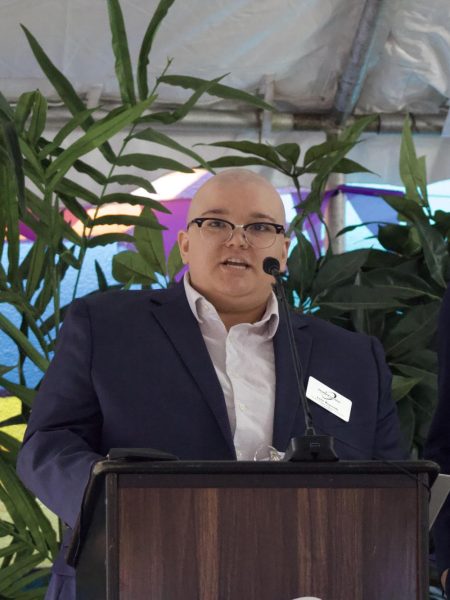
Lene Reynolds, the Pride Center coordinator, shared some of the history of the center and what started it all.
“Some faculty members were experiencing some really heinous homophobic incidents in the classroom, outside of the classroom, and students were experiencing those as well,” Reynolds said. “And so a group of staff and faculty and students kind of came together to form the Pride Center Committee to Combat Hate, or PC3H, which began advocating for a dedicated center space.”
For many LGBTQ+ students at a community college, the experience is transient. You are here for two years, maybe three, and then you’re gone. This creates a unique challenge for the Pride Center: how do you build a home for people who are only passing through?
The answer lies in the services. It’s not just about having a couch; it’s about the specialized academic counseling that is available and helps people understand why a transgender student’s transcript might look a little messy during a transition. It’s about the staff who know how to navigate the financial aid office when a student has been disowned by their family.
In the new center, these services have their own dedicated zones. There is a sense of professionalized care that wasn’t possible in the old, crowded quarters. Here, a student can have a private conversation about their education plan without the person at the next table hearing their business.
MJ Staples, who is a student worker for the center felt relieved when they walked into the new center and saw just how much more privacy there would be in the new space.
“This room that we’re in right now, this kind of private study room, didn’t exist in the old center at all. It was all one space. And the conversation could get really drowned out,” Staples said.
There is a tendency in the media to treat the LGBTQ+ community as a monolith, a single, colorful block of people. But Palomar is a commuter school in North County San Diego. The students here are veterans, they are parents, they are DACA recipients, and many are working two jobs while taking 15 units.
The new Pride Center seems to acknowledge this complexity. You see it in the way the space is used. It’s not just a “gay space.” It’s a study hall for people who happen to be queer. It’s a place where a first-generation college student can ask “dumb questions” about transfer credits without feeling judged.
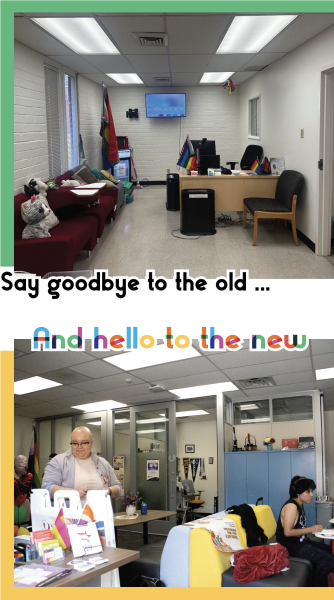
Bottom: Reynolds at work in the new location of the Pride Center. (Griselda Garcia)
The relocation to SU-17 has also made the center more accessible to those who might have been hesitant to seek it out before. Because it’s in a high-traffic area, walking in can be a split-second decision rather than a planned trek to a secluded wing of the campus.
“I think what we’re seeing is people will come walk by the space, and then they’ll do their own research into like our website or something. And then they’ll see that we have a service that they really want to make use of. And then they’ll come here,” Staples said.
While the grand opening in April 2026 was a celebration, the mood inside isn’t entirely celebratory. There is work to do. Outside the Palomar Bubble, the world is often hostile. Legislation in other states and even debates in school boards just miles from campus remind these students that their safety is often conditional.
In recent years, local San Diego County school boards have been embroiled in heated debates over parental notification policies which require schools to disclose a student’s gender identity to their families.
California saw a significant rise in challenges to LGBTQ+ literature in public libraries in 2024 and 2025, according to the American Library Association.
These local flashpoints, occurring just miles from the San Marcos campus, remind these students that their safety is often conditional.
The Pride Center staff knows that a new room doesn’t solve everything. They still deal with the hidden problems: food insecurity, housing instability and the mental health toll of a post-pandemic world. The new facility is a tool, but the people inside are the ones doing the heavy lifting.
It’s proof that a community college can be more than a place to get units; it can be a place where you are allowed to become yourself.
The sun sets early behind the hills of San Marcos, casting long shadows across the courtyard outside SU-17. Inside, the lights are bright, illuminating a space that was fought for, moved and finally settled.
The move is over. The boxes are unpacked. Now, the real work of the new Pride Center begins, not as a new project, but as a permanent fixture of the Palomar landscape. It is no longer a hidden gem; it is the heart of the Student Union, and it isn’t going anywhere.