
Coworker-core. Normies. NPCs. In the hyper-digital age there is no shortage of ways to call people boring, and no shortage of people who are called boring. Our modern society has flattened layered personalities into “cores,” turning identities into an aesthetic, while stripping away the depth, nuance and lived experiences that make it real. In the punk scene I come from we call them posers.
But how did we get to this point? Why do we now model ourselves in aesthetics, yet refuse to participate in the experiences that birthed them?
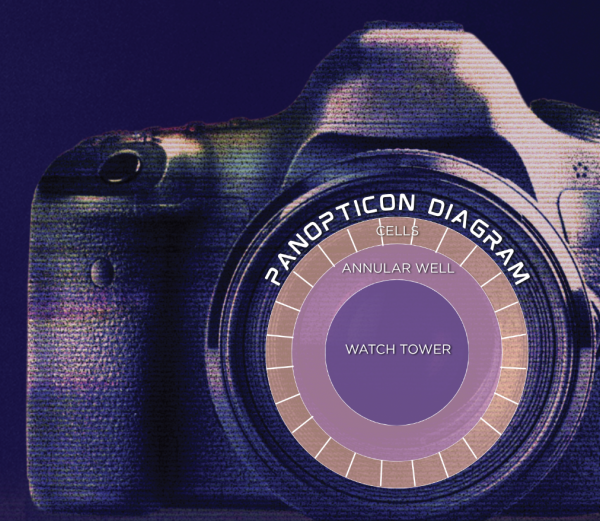
During the late 1700s, the Panopticon was created as a theoretical prison. The design featured two buildings: a guard tower placed inside of the larger outer wall made up of prison cells. The strength of this design was that it created the illusion that the prisoners were being watched at all times.
A 2024 review of the effects of surveillance on mental health found that those under constant surveillance are more likely to mute their personalities, to be less expressive, and to self-censor, becoming less distinct and more easily controlled.
Born between 1997 and 2012, at the height of the tech revolution, Gen Z is one of the most heavily documented generations in history. The DV Camcorder was invented in 1995 and quickly crept into American households. In 2002, Sprint launched the first camera phone available in America and by 2007 the iPhone was introduced to the masses. Camera technology had gone from being a rich man’s toy to a tool of the masses.
And with these technological changes, the paradigm shifted.
Gen Z became the first group of people to self-record in a significant capacity. The platforms and devices you use now know so much about you that they can predict your purchases, your travel habits, even the more mundane things like your music taste.
The data produced by your documented life is so expansive that even your image has been used to train generative AI and can be used without your knowledge, as documented in a 2025 California Law Review article.
Your life’s data is being collected by companies to be sold to marketing firms, other companies, or governments.
So how has this expansive surveillance network affected Gen Z development?
The presence of a camera has a direct influence on human behavior, pushing people toward a more socially acceptable course of action as the result of our approval-seeking tendencies, according to a 2024 Neuroscience of Consciousness paper. The presence of a camera has the same psychological effect as a pair of eyes.
A 2025 research article in The Proceedings of the National Academy of Sciences documented that people under surveillance are likely to change their behaviors, especially to self-censor.
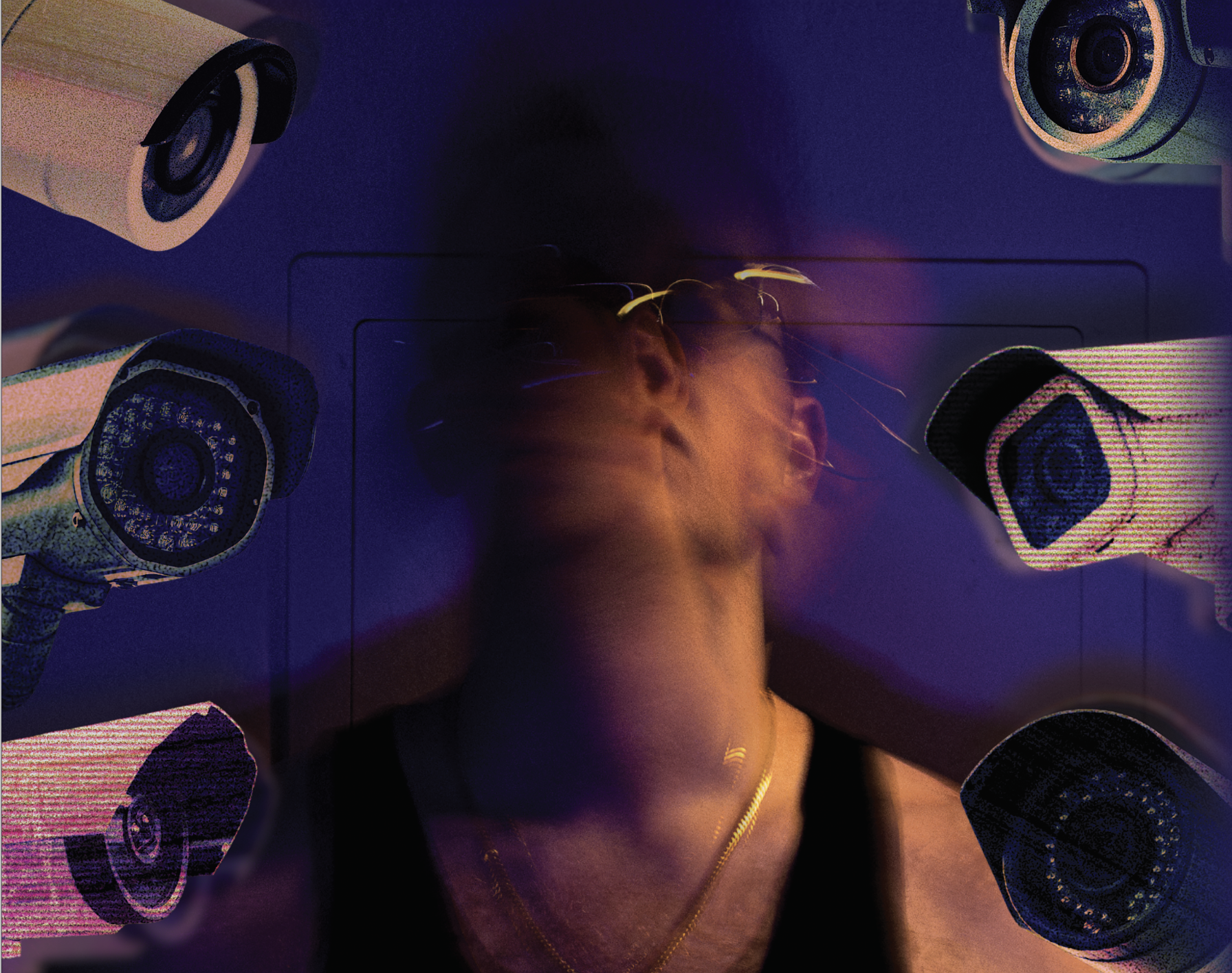
So it is unsurprising that so much of Gen Z behaves in such a muted fashion. They have grown up in a way where there was no privacy. Public spaces became infested with cameras.
As they grew older, the amount of truly anonymous spaces that existed where they could experiment with their identities and their personas decreased dramatically. Additionally, the consequences for stepping out of line grew greater. Social media gave a permanence to youthful mistakes.
Of course an aesthetic isn’t necessarily a sign of shallowness, style has always been a part of building an identity and can serve as an important first step into discovering a community.
But the difference now is the pressure to make one’s identity instantly recognizable, safe and easily consumed.
Surveillance does not create a performative identity, but it does reward its flattest versions.
Think of the “performative male” trend, what was likely someone’s identity was observed and turned into a “core” — a uniform that anyone could put on without any of the “required reading.” Or the more recent movement that strips the goth identity down to having black hair and lipstick, removing any of the aspects of the identity that could be scary or off-putting.
The knowledge of constantly being watched, archived, and judged pushes people toward safe, easy identities. “Cores” fit into that environment perfectly: recognizable, aesthetic and low-risk, but with none of the messy work.
Additionally, more and more cases revealing the extent to which Americans’ personal lives are monitored and how imperceptible the monitoring process could be have taken the national spotlight.
In 2012, Edward Snowden leaked classified documents revealing the National Security Agency was illegally tapping phones, utilizing the microphones and cameras for investigations, surveillance and personal reasons, such as creeping on their romantic interests.
More recently, companies such as Palantir and Flock have begun to tighten the reins even more, partnering with government agencies and local law enforcement to create networks of cameras laced throughout cities. These surveillance giants collect and consolidate data about individuals in an attempt to evaluate their future behaviors.
It can feel like there is nothing that can be done on an individual level, but that is never the case.
The Panopticon has one major flaw — it only has a few guards. Prisoners could not be observed at all times and the realization of that illusion causes a rapid breakdown of the prison structure.
While we exist in a cultural setting that encourages us to fit in, to abide by safe, empty, plastic personas, the real value is in living in a way that is true to yourself. The people who you feel drawn to and want to know more about do not exist as imitations of reality. Their existence is dictated by their own personal experiences, and they live true to that code, seeking approval solely from themselves and those they love.
Challenge yourself, your beliefs, fail, make a fool of yourself. In the process you will discover who you are. To be human is to be complicated, to contradict yourself. No person’s behavior can be predicted with complete accuracy. Use this to your advantage and grow into yourself. There aren’t enough eyes to watch everyone.