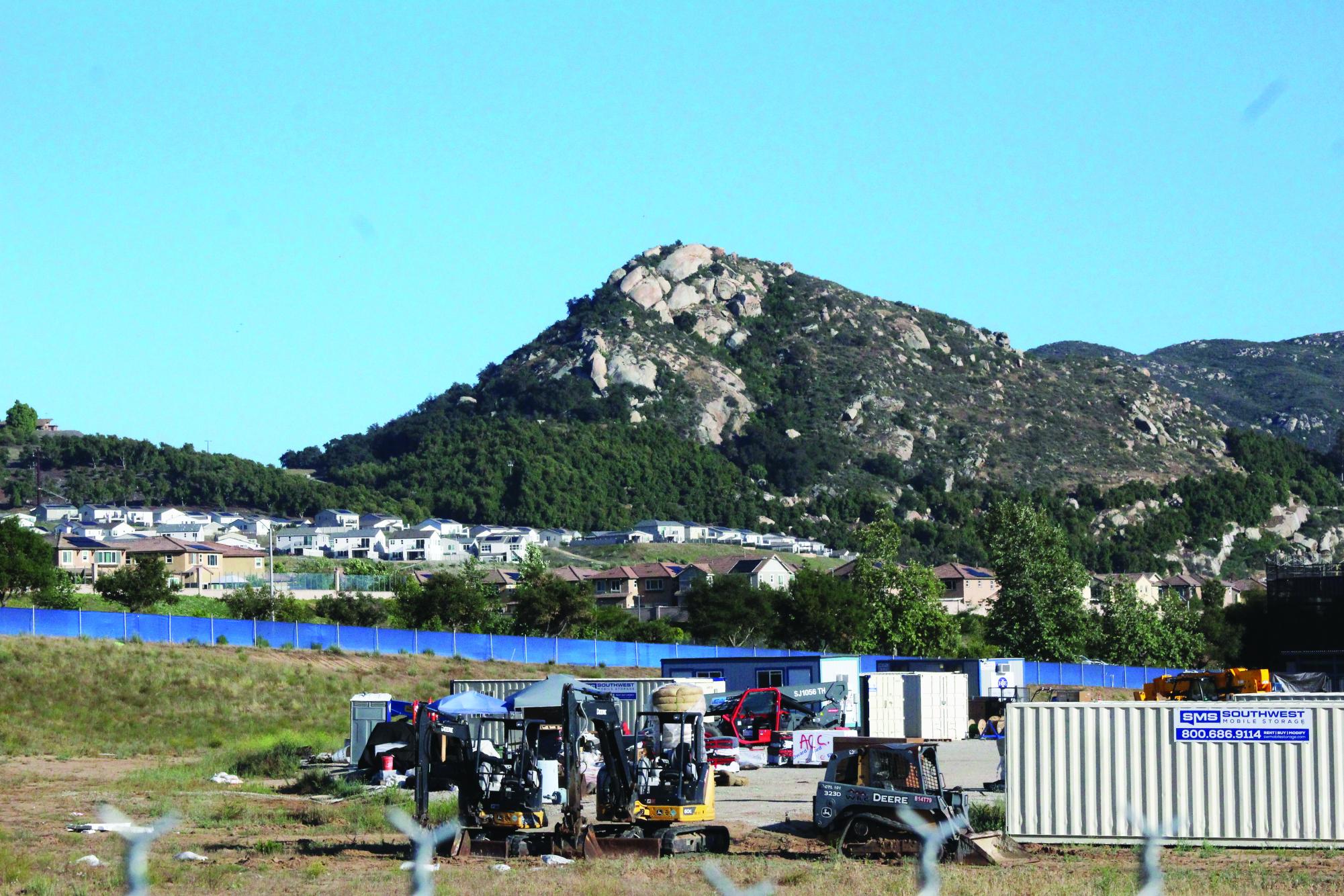

Nestled between Interstate 15 and Highway 76, Palomar’s Fallbrook Education Center (FEC) offers students in North County San Diego a closer and more accessible path forward to higher education.
Students and neon-clad construction workers are pushing the FEC toward its next chapter.
The FEC’s main building is set to open in the spring of 2027. The 40,000-square-foot building will serve as an academic hub designed to expand in-person learning and student services in Fallbrook.
Palomar’s main campus in San Marcos is inaccessible to students at the outer edges of North County if they don’t have their own car.
Public transportation to San Marcos from outside of Northern San Diego County is also lacking, making online classes a more practical option for students to work toward their degree. The FEC would provide a closer location with physical classrooms and in-person learning.
But in order to do so, the FEC’s main building needs to be finished.
 “The new facility will significantly expand what we can offer students and allow us to create a campus that better meets the needs of the community,” FEC Director Ryan Williams said.
Palomar’s Fallbrook location gives more students the opportunity to attend classes without having to commute through heavy traffic.
In an age where it’s becoming more and more commonplace to attend classes online, it may be difficult for some to see the need for physical, in-person classes. However, in-person classes fulfill the needs of students that online learning cannot fully replicate.
“Campuses provide opportunities for hands-on learning, collaboration, student support services and a sense of community that can be difficult to replicate online,” Williams said.
He explained that features in the new building, like modern classrooms, a computer lab, expanded student services and a science lab, will give students access to a more enriching college experience.
“Spaces like these support hands-on learning and provide the kind of collaborative environment that really enhances the college experience,” Williams said.
Although in-person classes provide experiences that online classes can’t, Williams did not deny the staying power of online learning.
“I believe the future of higher education will continue to be a balance between online flexibility and the resources and connections that physical campuses provide,” Williams said.
Students have been able to attend classes at the FEC since the summer of 2018, but the campus’s main building is set to open in the spring of 2027. Balfour Beatty is the contracting company in charge of building the main FEC complex.
This isn’t the first project Balfour Beatty has done for Palomar. Back in 2013, the company completed a major renovation of the Howard Brubeck Theatre and also built the current Humanities building on the San Marcos campus.
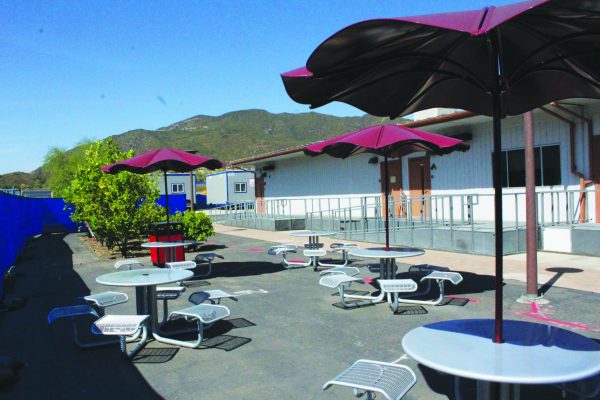
Construction of the FEC is taking place in multiple phases. The current stage of the FEC is referred to as the “interim village,” which is a collection of 18 modular buildings.
HMC Architects is the architecture firm behind the campus’s design, including the interim village.
“The priority of the initial phase of construction was to get facilities open to support student success and educational goals of the center,” HMC Project Delivery Director Matt Mori said.
The interim village provides students with spaces they would need at any other college, including a library, a computer and science lab, and a student lounge.
These services will eventually be moved to dedicated spaces within the main building upon its completion.
Williams said that what makes the FEC special is the educational opportunities it will provide for new and returning students.
“What makes the education center especially meaningful is that it allows local students to pursue higher education without traveling long distances, while also serving community members returning to school later in life,” Williams said.
With any long-term projects, there is always the possibility that setbacks will arise, whether due to financial troubles or other unforeseen issues.
The current addition to the FEC is smaller than what was originally planned.
In 2020, the Palomar College Governing Board made the decision to halve the Fallbrook 80 project, changing the project into the Fallbrook 40 instead.
The Palomar Governing Board cited rising costs of the project post-pandemic as one of the main reasons the original 80,000-square-foot building plan was scaled back.
Even though the current facility is smaller, William said that it is not a lesser quality project than the original plan.
“One of the biggest priorities of the building’s design was to create what I call ‘student sticky spaces’ and incorporate modern classrooms, inviting indoor and outdoor student spaces, and areas where students can study, collaborate, and relax,” Williams said.
Mori added that flexible study spaces will also be available to students, which will accommodate different-sized study groups and provide a social student environment.
He also explained that Fallbrook’s climate informed the decisions made in the campus designs to create an environment that is conducive to student interaction and comfort.
Williams stated that these quality-of-life choices can have a positive impact on the overall student experience on campus.
“Clean, well-designed spaces with natural light and welcoming architecture can help students feel comfortable, focused, and motivated,” Williams said. “When a campus feels welcoming and thoughtfully designed, it helps students feel like they truly belong there.”
Additionally, the 80-acre lot will make it possible for Palomar to further expand the FEC in the future. Williams said that there is a possibility of adding a sports facility on campus.
“At this stage, we’re not yet sure which specific sports might eventually be incorporated here,” Williams said. “That said, I’ve had some preliminary conversations with our Athletic Director, Dan Lynds, and there is certainly interest and enthusiasm around the idea of bringing athletic opportunities to Fallbrook as the campus continues to grow.”
Fallbrook 40 is the latest project that Palomar commissioned Balfour Beatty to build. Balfour Beatty broke ground for the main FEC building on Oct. 13, 2017, and they’ve been making steady progress since.
The latest milestone in the building’s construction was the topping-off ceremony that took place on
Oct. 1, 2025.

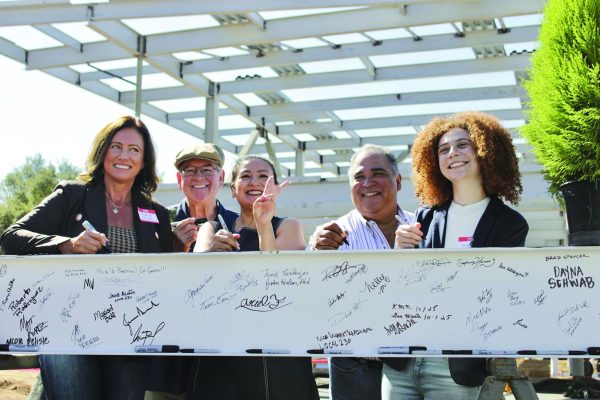
(Griselda Garcia)
The highest beam in the structure was signed by governing board members, faculty, along with the construction crew and members of the local Fallbrook community.
Each day in Fallbrook, there are dozens of neon-covered men and women working on the site.
“We currently have between 60 to 80 workers on site daily,” Fallbrook 40 Senior Superintendent Evan Gustafson said.
There are numerous jobs that need to be done in order to bring the Fallbrook 40 from blueprints to reality. Gustafson said that a total of 32 different trades are involved in the construction of the project.
Williams said students that the FEC will serve future students as a place where they can come to learn, study and meet in a comfortable environment.
“The campus sits in a beautiful part of North County that still has a
rural feel, which makes it a welcoming and calm place to learn,” Williams said.
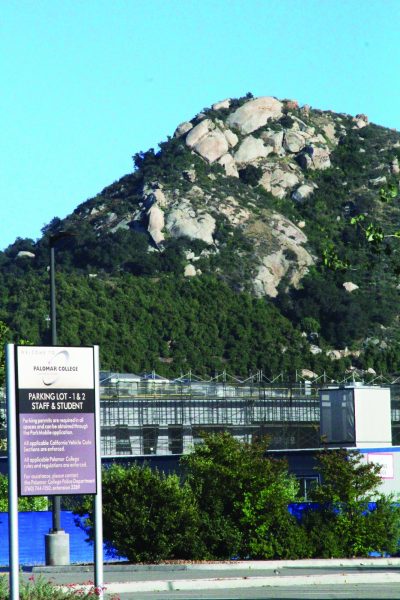
As the building begins to peak over the construction barriers, it’s apparent that the future of the campus is fast approaching. The project is set to be finished in the spring of 2027. In the meantime, the FEC, located at 35090 Horse
Ranch Creek Road, remains open during construction.