
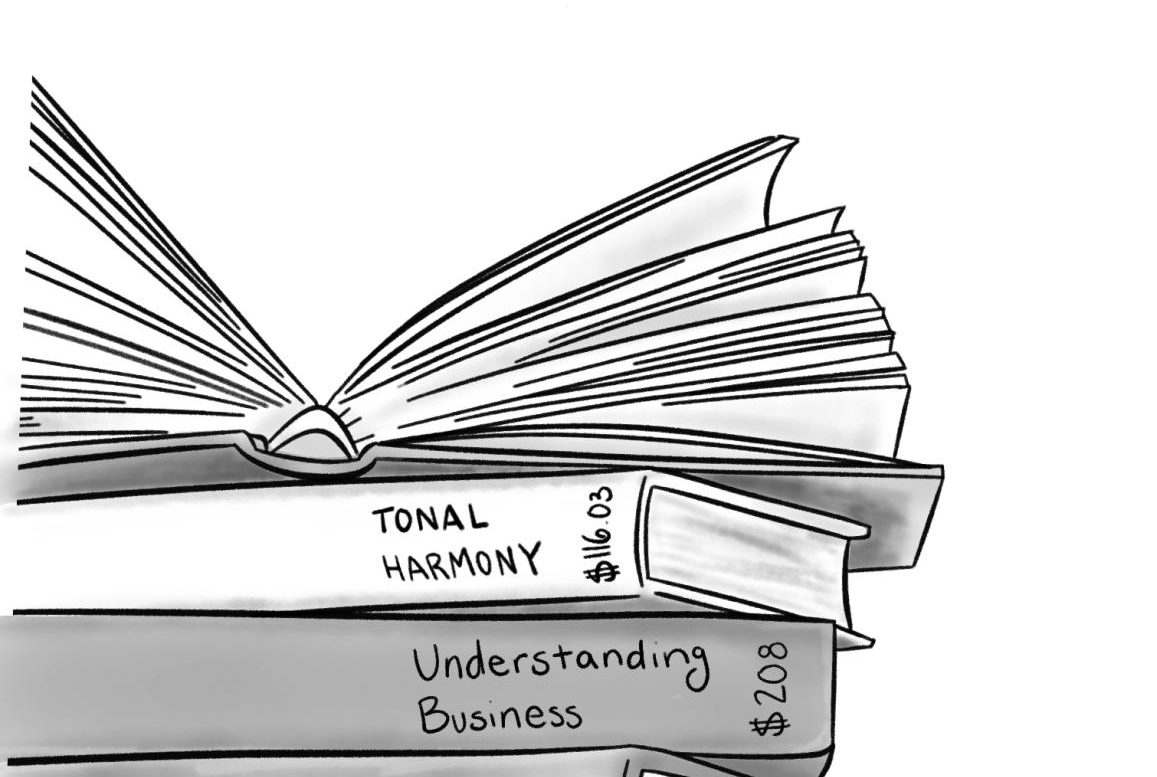
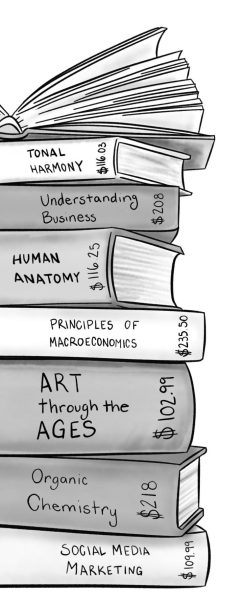
The first week of college feels hopeful. You’ve got bookstore credit, your tuition is covered for the year, and everything feels possible. But that feeling fades away quickly when your total hits more than $300. At Palomar, a single textbook can take more than half of the credit. For most students, that money is gone before classes even begin.
I believe it’s time for Palomar to review how Palomar Promise supports students — not just with free tuition but with accessible textbook relief. Increasing the bookstore credit or expanding Low and Zero-Textbook-Cost programs would help students actually access required materials.
Palomar Promise eases overall costs for incoming students. The program offers up to two years of free tuition and $200-$250 in bookstore credit for textbooks and other supplies. This year alone, over 6,800 students are on Palomar Promise, according to a Palomar News article in September.
But as textbook costs rise, the Promise credit no longer keeps up with what students need for everyday classes.
General-education textbooks can cost $100 to $300, depending on the course and edition required. STEM courses, such as calculus, often require texts $200 or more. If access codes or platforms are required, they can add $50-$100 per course. Renting or buying used books may cost less but not always, and sometimes books are not available at all through the campus bookstore.
Prices for textbooks increased by about 42% between July 2011 and March 2018, according to the U.S. Bureau of Labor Statistics. Prices dropped after 2018, then rose again after January 2020. By mid-2021, prices remained below the 2018 peak, but still significantly higher than in the early 2010s.
Additionally, college tuition and fees have stayed relatively stable since September 2019, making textbooks a larger share of students’ total college expenses.
Many students skip purchasing textbooks altogether, drop classes, or borrow from friends. As a student myself, I’ve had to make those same choices. I borrowed my friend’s economics textbook because I couldn’t afford the $155 price tag.
Students typically spend around $468 per semester, about $936 a year, according to the 2023-2024 Cost of Attendance report from Palomar College. $468 exceeds the per-semester bookstore credit of $250 by more than $200. This difference pushes students to either pay out of pocket or seek out risky online sellers.
For example, in fall 2025 Palomar’s online bookstore listed “Brief Applied Calculus Hybrid,” by James Stewart and Daniel Clegg, for $249. The same textbook was available on Amazon for about $117, while used copies and rentals from online sources or ThriftBooks were priced below $100.
Palomar College does offer programs like Zero-Textbook-Cost (ZTC) and Low-Textbook-Cost (LTC). ZTC courses provide free digital resources, while LTC keeps materials under $40 per course. Programs like these do help make college materials more affordable, especially for those juggling multiple classes.
The reality is not all courses at Palomar College offer ZTC or LTC or alternatives for the required texts. This means students majoring in certain fields, like STEM, still face high costs, even when they’re part of Palomar Promise.
Palomar Promise opens doors to college, but walking through shouldn’t empty students’ pockets. If Palomar wants to live up to its name, increasing the bookstore credit to $500, if not more, or expanding ZTC and LTC for more courses would be a strong start. Making these changes wouldn’t just relieve financial strain, it would show students that Palomar is truly invested in helping them succeed beyond tuition.