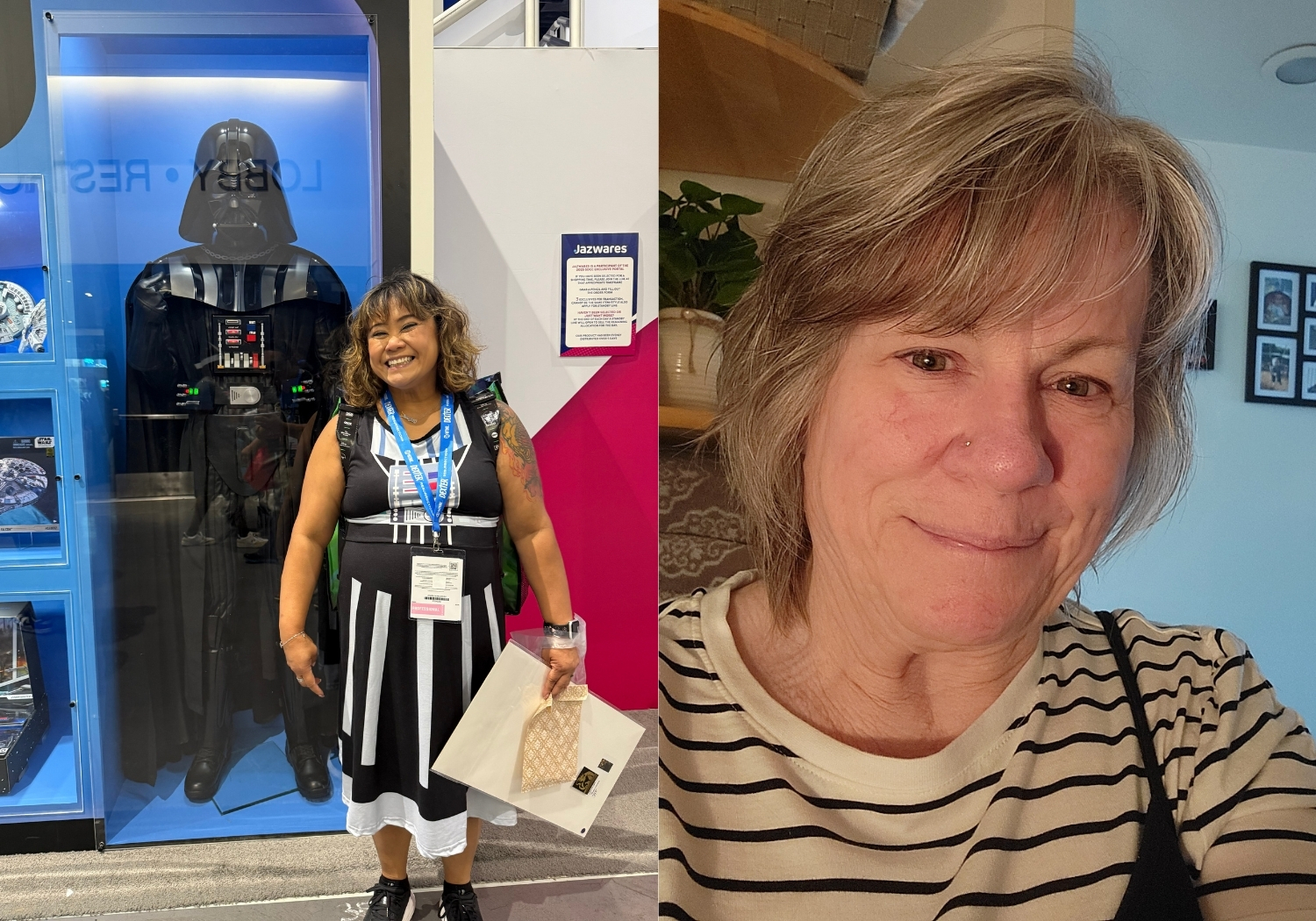

At Palomar College, there are 21,108 students enrolled, with 2,782 being returning students as of July 2025 — a clear sign that more learners are choosing to continue their education after time away. Their stories reflect resilience and determination, proving that age, circumstances, or past interruptions don’t define one’s ability to learn and grow.
BALANCING BOOTS AND BOOKS
After 17 years in the military, traveling across the country and overseas to train Marines, Ann Abuan thought her school days were behind her. Education had always been important, but in a family built around service and sacrifice, duty often came first.
Coming back to Palomar College decades later wasn’t something she had ever planned. Yet as her time in the military ended, Abuan felt a calling to rediscover something she had put aside: her curiosity.
“I never thought I’d be back in a classroom,” Abuan said. “But I wanted to challenge myself again and prove that it’s never too late to learn.”
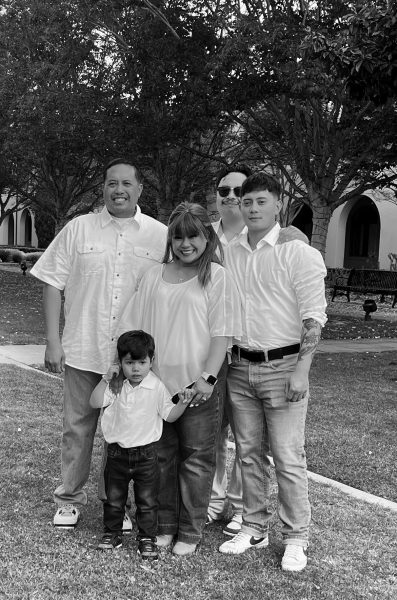
(Photo Courtesy of Ann Abuan)
Her first day on campus was nerve-wracking. She knew she would be one of the oldest students in the room. Sitting among classmates who grew up with TikTok and smartphones, she wondered if she still belonged in this fast-paced world of Canvas modules and group projects.
But her years in the military had prepared her to adapt. Leading others taught her patience and resilience, traits that now serve her well in the classroom.
“Being older isn’t a disadvantage, it’s a perspective,” Abuan said. “I’ve lived experiences that help me approach learning differently.”
Abuan works at Palomar’s Veterans Resource Center (VRC), where she helps fellow veterans navigate educational benefits and the transition back to civilian life.
Her return to college wasn’t just an emotional shift; it was also a personal one. Abuan was diagnosed with ADHD, which made focusing and managing assignments difficult at first. The Disability Resource Center (DRC) became a turning point in her journey, helping her access accommodations and learn strategies for success.
“The DRC really helped me understand how I learn,” Abuan said. “They made it possible for me to manage my ADHD and still perform at my best.”
Online learning, digital textbooks and new technology felt overwhelming in the beginning.
She admitted she sometimes had to Google slang or cultural references to keep up with younger classmates. But over time, those small struggles turned into opportunities to grow — and connect.
Now nearing graduation, Abuan is preparing to transfer to California State University Fullerton or San Diego State University to pursue a degree in communications. She hopes to build a career that combines her leadership experience with her passion for connecting with others.
“Even though I know about interpersonal communication from my years in the military, it’s still new to me in the classroom,” she said. “Every day, I learn something I can use not just for school, but for life.”
DRIVEN TO RETURN
When most people think of college, they imagine young adults navigating dorms, cafeteria lines and lecture halls. But for some, the classroom becomes a place of rediscovery after decades away.
Sandi Rush first attended Palomar in the ‘90s as a single mother raising two children on her own.
Life demanded her full attention, from volunteering with her kids’ sports leagues to managing a household without family support.

(Photo Courtesy of Sandi Rush)
“I had to focus on them,” Rush said. “They were my number one priority.” At the time, she was studying computer science, but when her children became teenagers, school had to take a backseat—even as she balanced life with her disability.
Years later, after retiring from a wheelchair racing career and overcoming cancer twice, she decided it was time to return.
“As you age, your brain needs to be exercised just like your body,” Rush said. “It’s important to keep that brain functioning.”
Adjusting to modern college life brought challenges. The campus had changed drastically, with new buildings, parking structures and online courses.
The Disability Resource Center (DRC) became an essential support, helping her navigate accommodations for extra time on exams and providing resources for accessible learning.
“They made it easy to return to school,” Rush said. “Having their support makes a huge difference for anyone who needs it.”
Financial assistance from the California College Promise Grant, Pell Grants, and the Department of Rehabilitation made it possible for her to focus fully on her studies. Online classes gave her flexibility to learn at her own pace, while labs allowed hands-on exploration of new concepts. Rush also finds joy in the intergenerational mix of her classrooms.
“We all bring something unique to the table,” she said. “Being around younger students keeps us informed and engaged.”
For Rush, returning to school isn’t just about completing a degree — it’s a reminder that education is timeless.
“Every day, I feel grateful to be learning again,” she said. “It’s never too late to keep growing.”